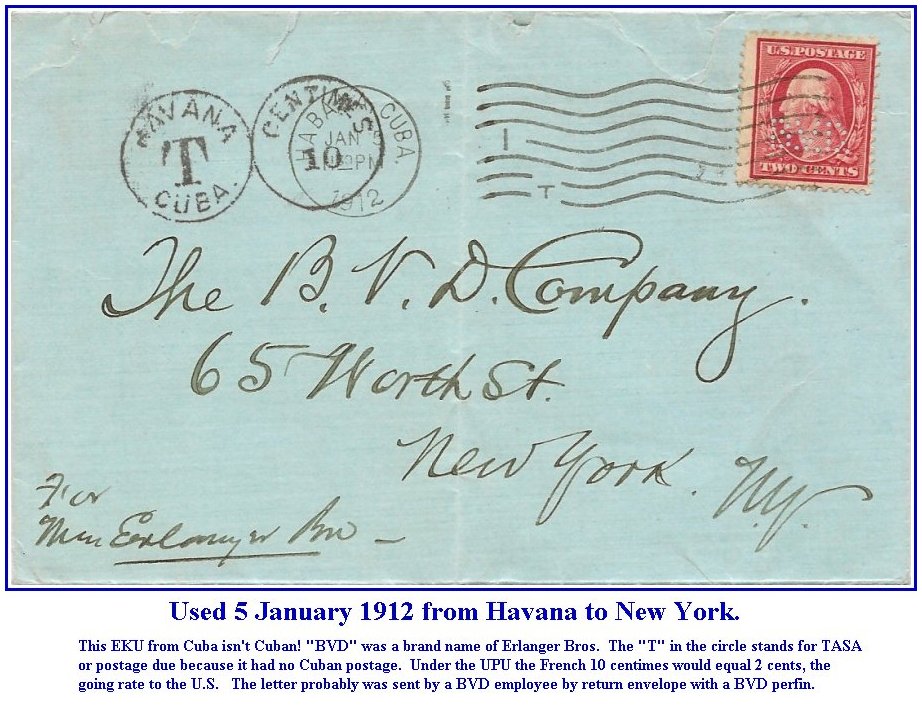
Perfins on the Stamps of Cuba
Sellos de Cuba con perforaciones de empresas
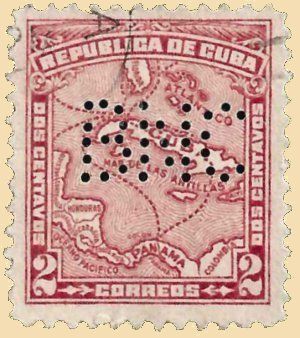
INDEX

Perfins on the Stamps of CubaSellos de Cuba con perforaciones de empresas |
|
INDEX |
|
|
A pictorial exhibition of Cuban perforated insignia stamps
|
||
1 – Perfins on Postage Stamps |
||||||
| No. | Firm / Address / Years of Use / Notes | Perfin | Stamps Perforated (Edifil 2012 Catalog) |
Front | Reverse (* Mirror image) |
Cover (Click to enlarge) |
|---|---|---|---|---|---|---|
| Núm. | Compañia / Dirección / Años en uso / Notas | Perfin | sellos perforados (Edifil 2012 Catálogo) |
Frente | Reverso (* imagen espejo) |
Cubierta (pulse para vista detallada) |
| 01 | Acosta & Company Inquisidor 15, La Habana 1917 There is an internet reference to the company listed, in 1921, under "Almacenes de Viveres" or grocery store, probably wholesale in imports and exports. An advertisement in a paper journal indicates they were engaged in the import and export of "paper and pulp" Click on this link for more A&C covers and stamps. |
 |
205, 206, 206a, 207, 208 | 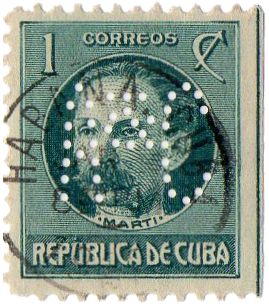 |
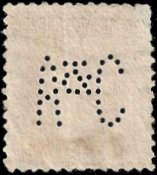 |
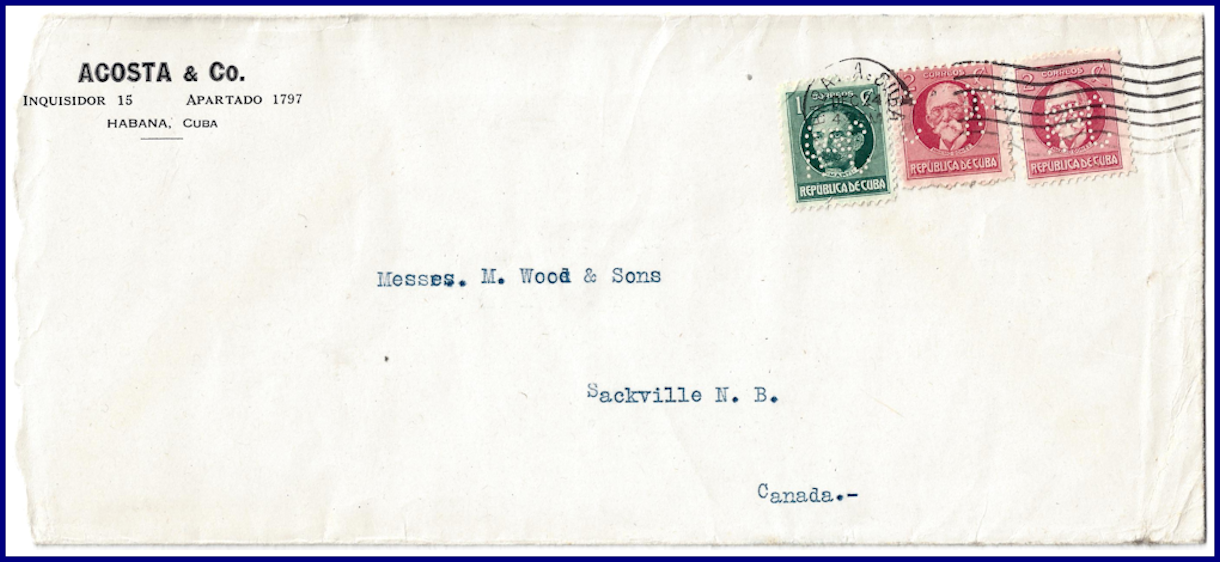 24 December 1918(?) This single example of the A&C perfin on cover is owned by collector Robert Littrell. |
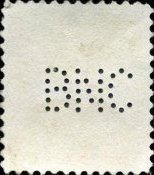
| 02 | Banco Nacional de Cuba Obispo & Cuba, La Habana 1914 - 1922 |
BNC | 195, 196, 196A, 198, 198A, 200, 200A, 204, 205, 206, 206a, 207, 208, 210, 212, 213 | 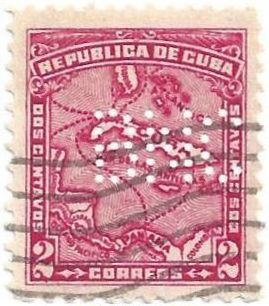 |
 * * |
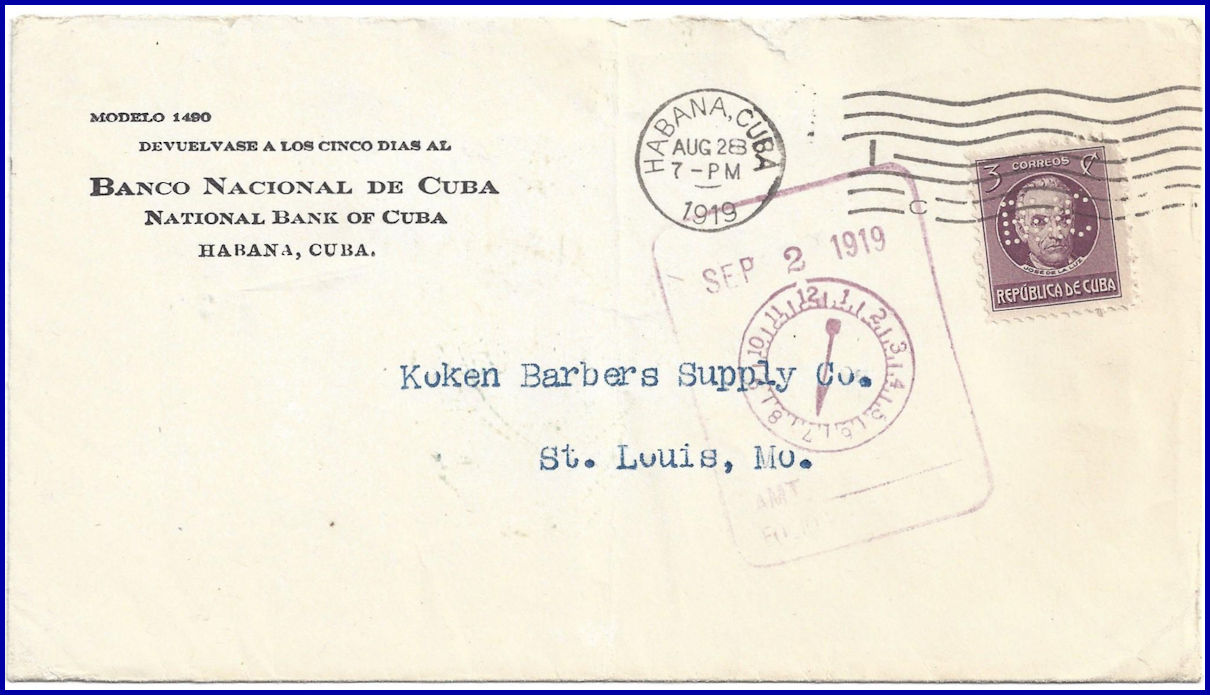 13 August 1918 |
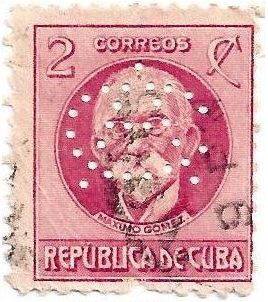
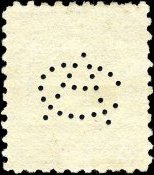
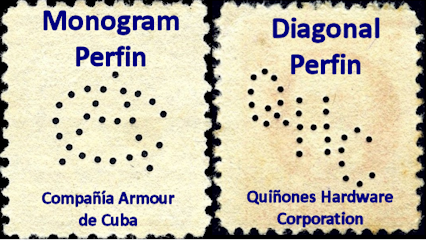
| 03 | Compañía Armour de Cuba 1 (Armour & Company) also: Compañía Abono Armour de Cuba (Armour Fertilizer) Mercaderes 15, Apartado 470, La Habana 1917 - 1928 Subsidiary of the U.S. company of the same name, Armour had large interests in beef and mutton. |
CA (Monogram) |
205, 206, 206a, 207, 210, 214, 215, 224 Timbre Nacional revenue |
 |
 * * |
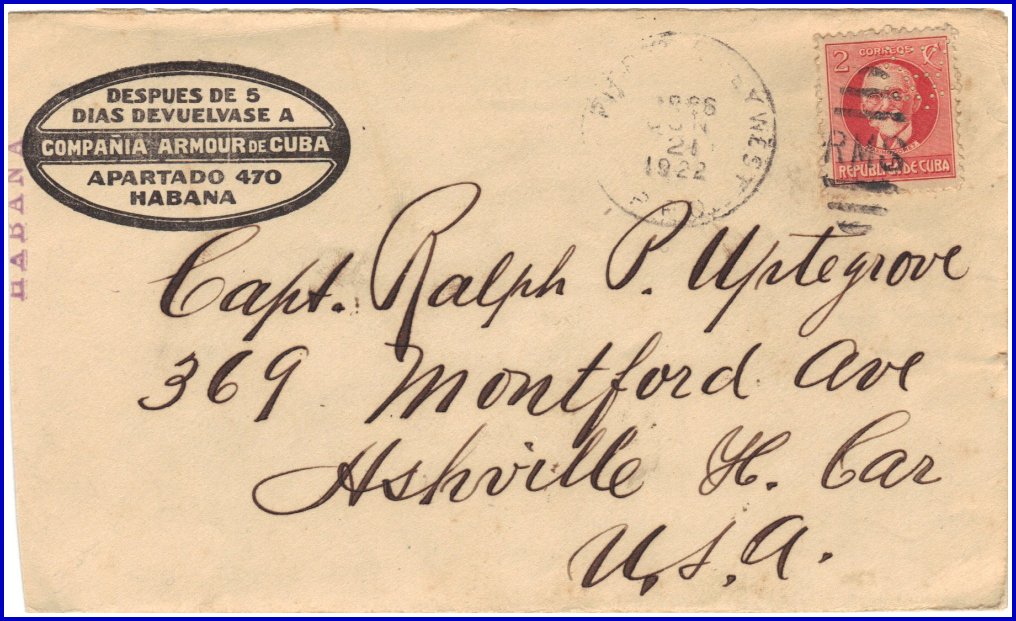 21 June 1922 |
| 04 | Cuban Telephone Co. Aguila & Dragones (P.O. Box 945), La Habana 1917 - 1933 The Cuban Telephone Company was a subsidiary of IT&T |
 |
203, 205, 206, 206a, 207, 208, 210, 214, 215, 216, 218, 220, 222, 224, 227, 233, 235, 244, 245, 251, 252, 253, 256, 259, 269, 272, 273, 273A | 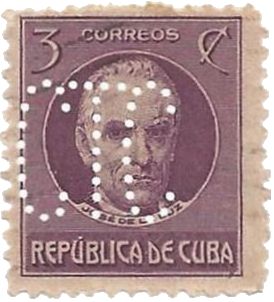 |
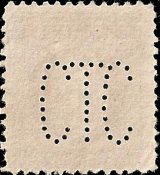 * * |
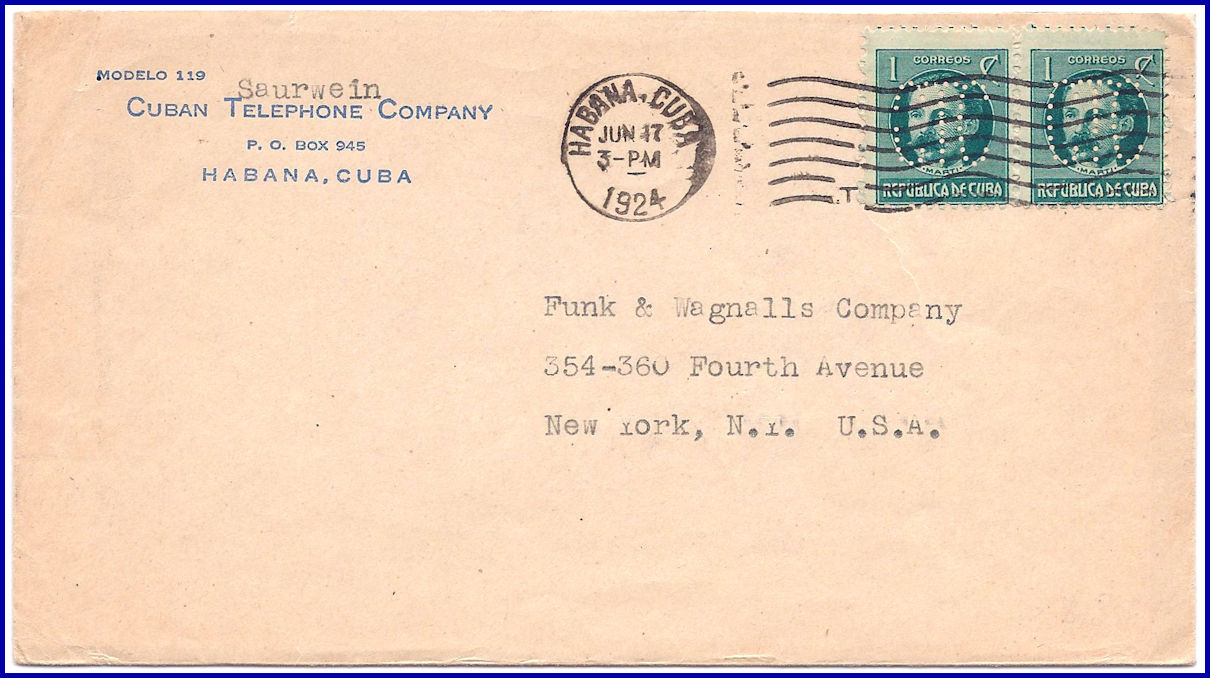 17 June 1924 |
| 05 | R.G. Dun & Company Obispo & Cuba (Banco Nacional building), Apartado 900, La Habana 1911 - 1938 Robert Graham Dun was a merchant, financial services broker. He began his career in Tappan & Douglass, the first mercantile agency in New York City, in 1850, becoming partner in 1854. He opened his own credit-rating firm in 1861, R. G. Dun & Company, with branches in major cities nationwide. The company was an early adopter of office machinery, including the typewriter, on which he composed the weekly "Dun's Review" to review international business condition. The firm later merged to form Dun & Bradstreet, one of the best known credit-rating and financial services publishing firms in the country. |
 |
190, 191, 195, 195A, 196, 196A, 201, 205, 206, 206a, 207, 214, 215, 224, 251, 252, 253, 254, 269, 272A, 273, 273A, 302 Postal Tax 1 |
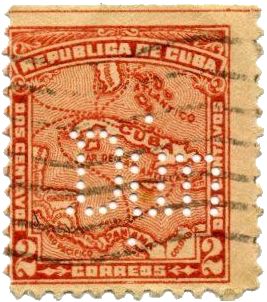 |
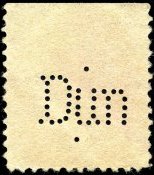 * * |
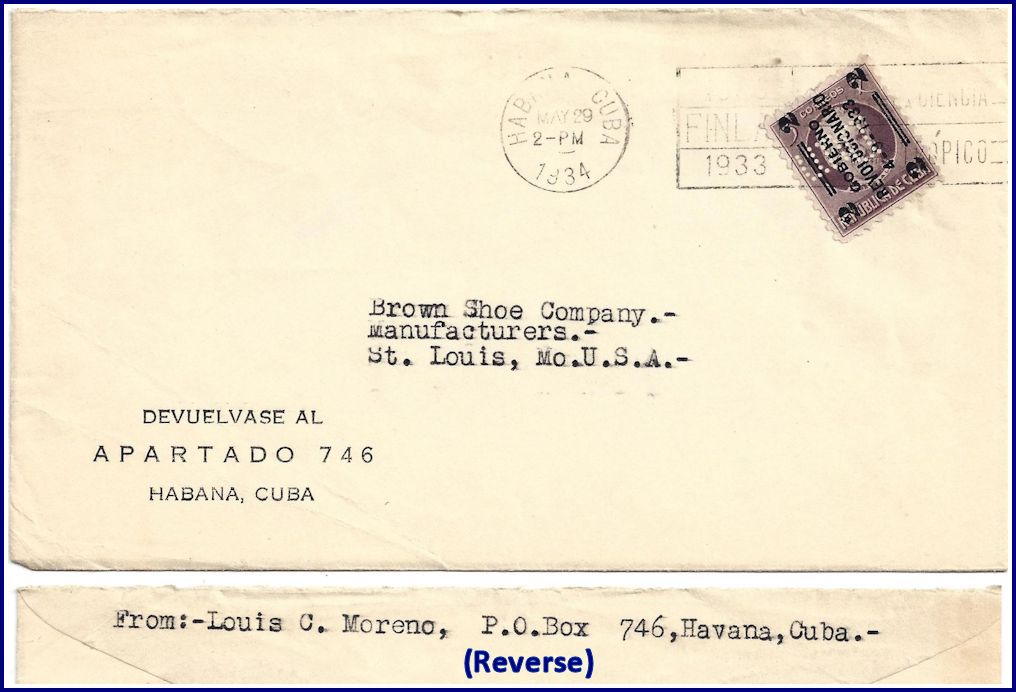 29 May 1934 |
| 06 | Enrique Armaignac Gallo 66 (now 10 de Octubre), Santiago de Cuba 1917 - 1945 This company sold boots, shoes, harnesses and saddles. |
EA | 205, 206, 206a, 215, 252, 253, 269 | 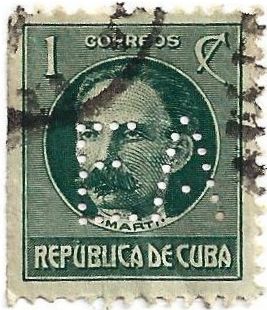 |
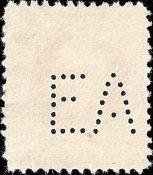 * * |
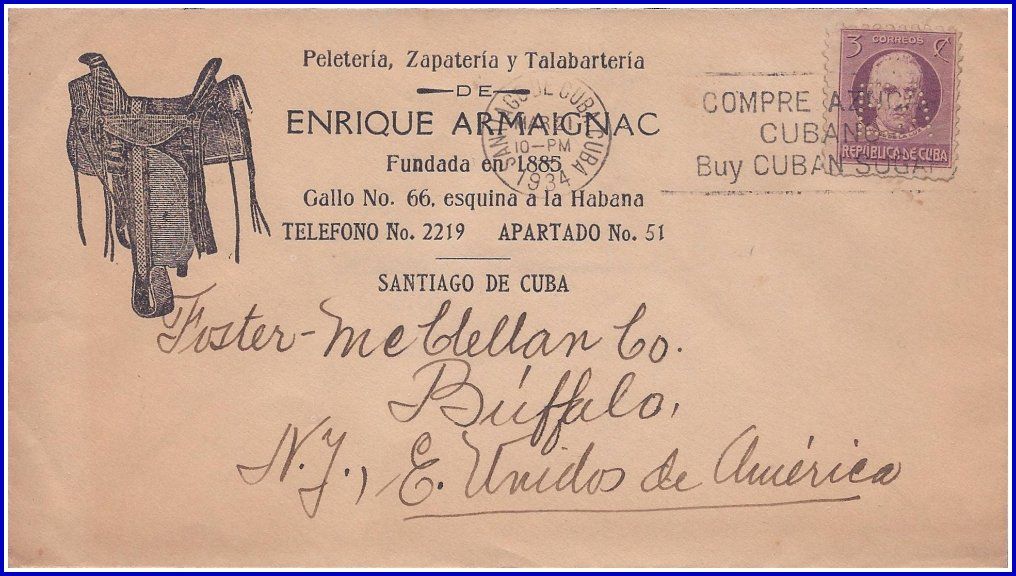 21 March 1934 |
| 07 | El Sol de Canadá (Sun Life Assurance Company of Canada) Aguiar 75, La Habana 1917 - 1948 |
EL SOL |
205, 206, 206a, 207, 208, 209, 210, 211, 212, 215, 216, 217, 218, 222, 225, 227, 228, 229, 230, 231, 234, 237, 243, 244, 245, 246, 247, 247a, 248, 251, 252, 253, 254, 255, 255a, 256, 256a, 261, 262, 263, 264, 266, 267,
268, 269, 271, 273, 274, 275, 281, 300, 307, 328, 330, 331, 332, 335s, 336, 338, 342, 345, 351, 352, 357, 358, 361, 370, 375, 380, 384, 389, 395, 405, 408, 411, 419 Semipostal 1 Postal Tax 1, 2, 3, 4, 5, 6, 7, 8 Semi-postal 1 |
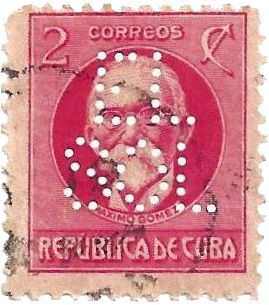 |
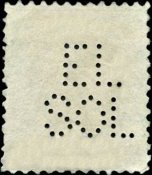 * * |
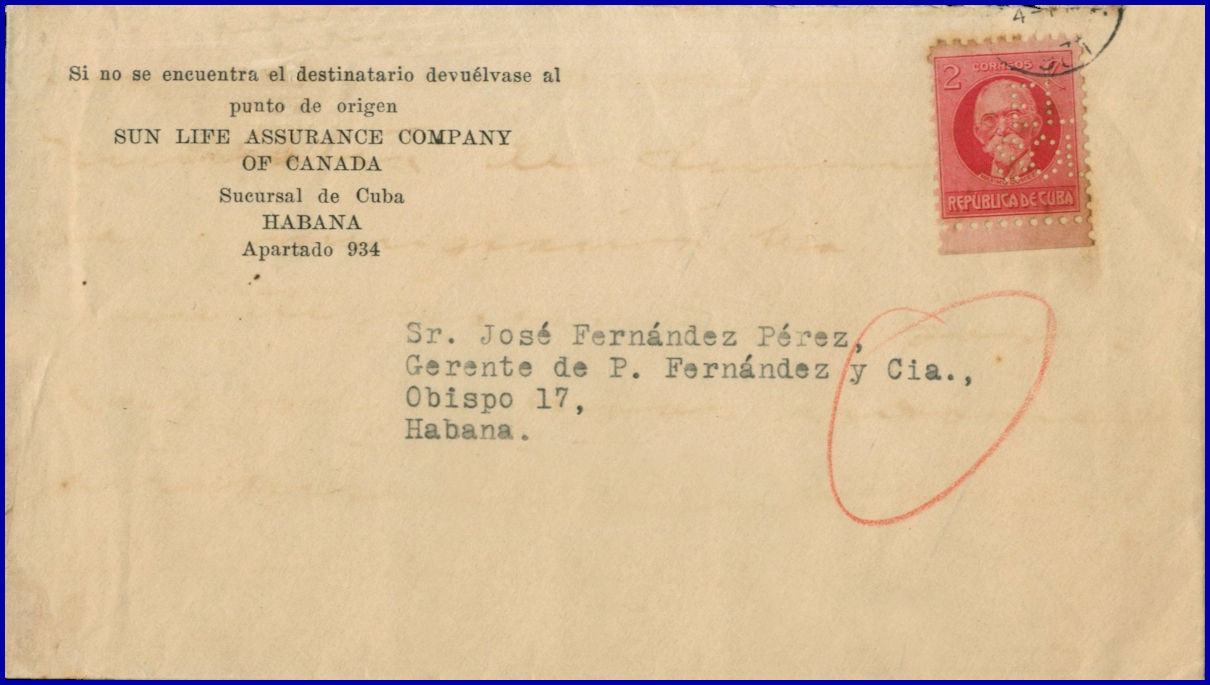 16 September 1940 |
| 07a | El Sol de Canadá (Sun Life Assurance Company of Canada) Obrapía 58 / Aguiar 75 La Habana 1941 |
EL SOL 3 additional control holes 3 and bent "E" |
Postal Tax (Sobretasa postal) 4 |
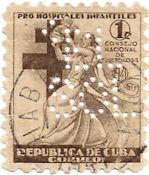 |
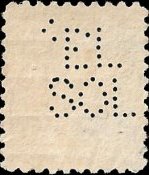 * * |
No cover has been documentedNingun uso en cubierta se ha reportado. |
| 08 | Empresa Naviera de Cuba San Pedro 262, La Habana 1914 - 1939 This company was a steamship line with regular service to New York, San Juan and Central America. In 1940, the ship Cuba plied the waters between Havana, Santiago de Cuba, Ciudad Trujillo, San Juan, Curaçao and La Guaira. |
 |
203, 205, 206a, 207, 208, 214, 215, 218, 222, 247, 251, 252, 253, 255, 256, 256a, 263, 264, 267, 269, 274, 279, 286, 290, 292, 293, 294, 295, 300, 302, 303, 331, 333, 334 Semipostal 1 |
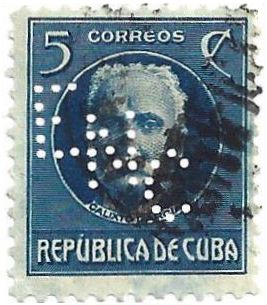 |
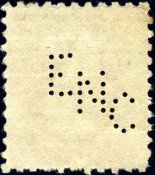 * * |
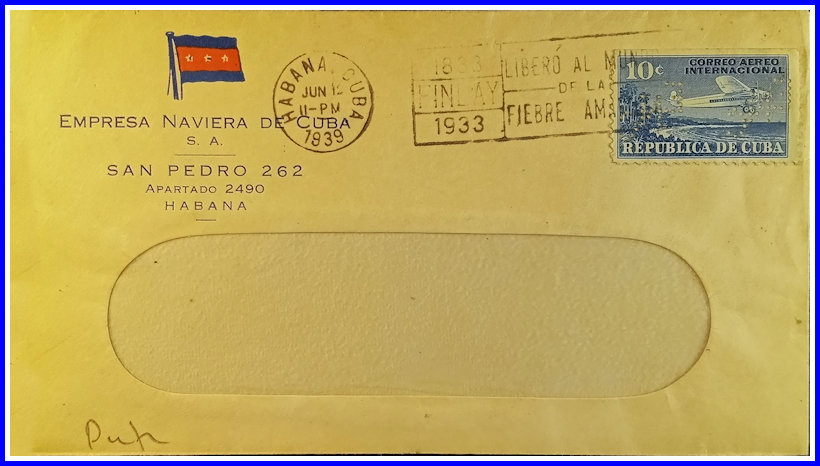 19 July 1939. This single example of the ENC (diagonal) perfin on cover is owned by collector Sofia Almdovar. |
| 09 | Empresa Naviera de Cuba La Habana ca. 1930 Here is what Cuban collector Alfredo Díaz Gámez has to say about the ENC horizontal perfin: "This horizontal mark is a controversial one. Some references have attributed it to the same enterprise as the diagonal ENC, the Empresa Naviera de Cuba, but this matter leads to certain questions. Why did this enterprise use two different marks at the same time? Why was the Gómez 1930 2c stamp (Edifil 252, Scott 309) perfined with both marks, diagonal and horizontal? Did Empresa Naviera, located at Havana, have an office in another city and therefore need to use two different marks to identify each one? I cannot answer those questions, but I personally think that maybe the horizontal ENC doesn't belong to Empresa Naviera de Cuba, but to another unknown company, coincidently with the same initials." |
ENC horizontal |
251, 252 |  |
No cover has been documentedNingun uso en cubierta se ha reportado. |
|
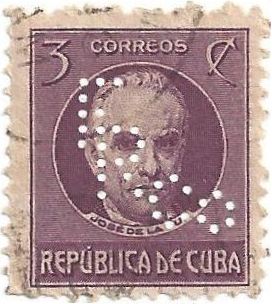
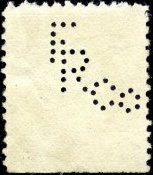
| 10 | Frank Robins Company 1 Edificio Robins, Obispo & Habana, La Habana 1917 - 1925
This firm dealt in musical instruments and office equipment. It has also been connected to advertising for the Remington Typewriter Co. and the Burroughs Adding Machine Co. |
 |
205, 206, 206a, 207, 208, 210, 215 Timbre Nacional revenue |
 |
 * * |
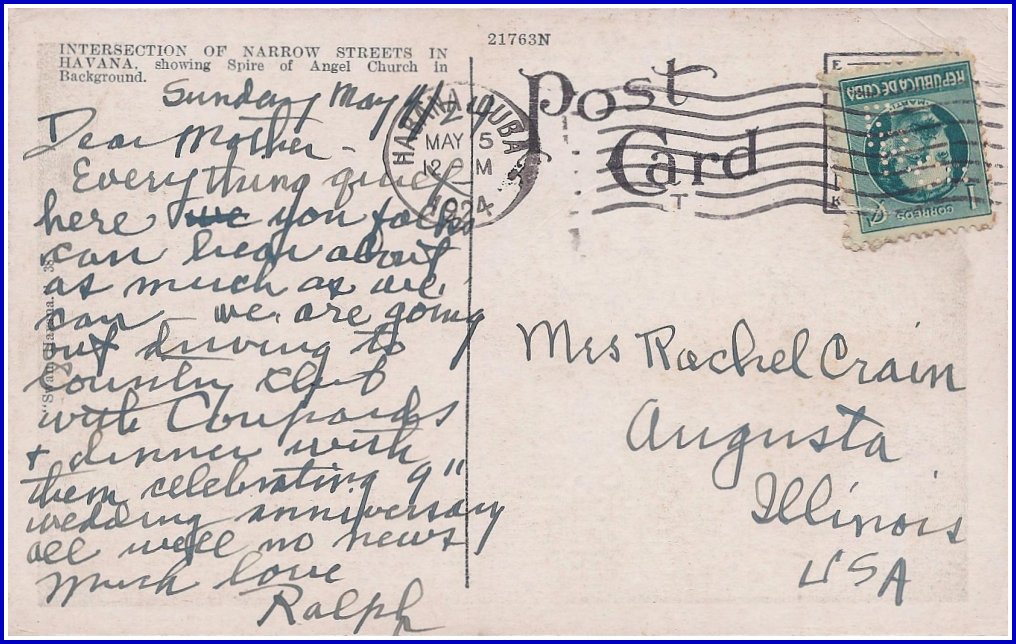 5 May 1924 No cover has been documented on letterhead of companyThis postcard was written by an employee of Frank Robins Co. See the story by following the link at left.2 |
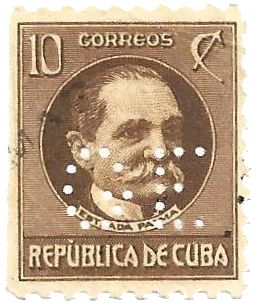
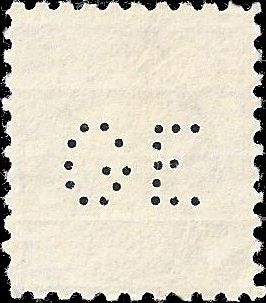
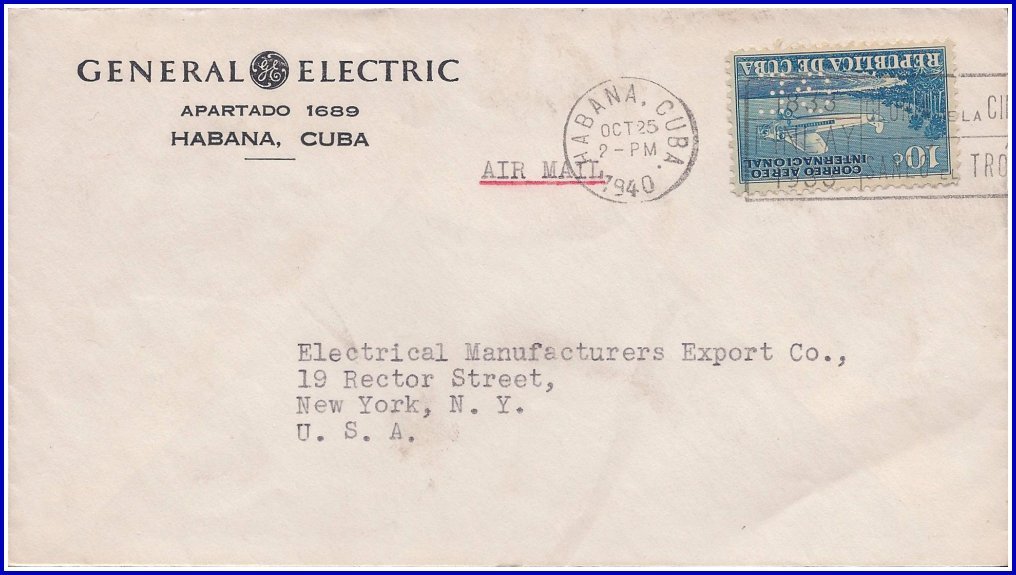
| 11 | General Electric Cubana, S.A. Obispo 79 (later Prado & Animas), La Habana 1930-1958 A subsidiary of the U.S. firm, it distributed refrigeration equipment and household appliances. |
GE | 212, 246, 246a, 247, 248, 251, 252, 253, 255, 255a, 256, 256a, 258, 259, 261, 263, 264, 264a, 265, 255, 330, 331, 332, 334, 335, 336, 337,
338, 339, 340, 342, 346, 349, 351, 353, 355, 361, 362, 363, 364, 367, 368, 370, 375, 376, 377, 379, 380, 381, 382, 383, 387, 388, 390, 391, 392, 395, 398, 402,
403, 407, 408, 409, 418, 419, 422, 424, 426, 432, 433, 440, 511, 536, 537, 555, 558, 561, 566, 567, 571, 576, 578, 579, 586, 601, 602, 619, 642, 650, 654, 665, 726,
750, 834, 861 Postal Tax 2, 3, 4, 5, 6, 7, 8, 9, 10, 11, 16, 16a, 28, 32, 34, 39, 42 |
 |
 * * |
 25 October 1940 |
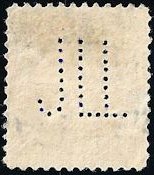
| 12 | José Llano [Tentative ID] Obispo 111 (at the corner of Compostela), La Habana 1917-1930 José Llano was the owner of a jewelry store in downtown Havana which also carried crystal glassware. This identification has not been confirmed by a cover.Esta identificacion no se ha verificado en cubierta. |
 |
205, 206, 206a, 208, 210, 215, 240 | 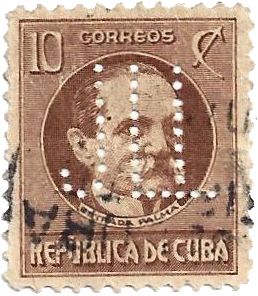 |
 * * |
No cover has been documentedNingun uso en cubierta se ha reportado. |
| 13 | Monroe & Company [Tentative ID] Edificio Robins, 510, Obispo & Habana, La Habana 1914-1917 Charles W. Monroe, President. This was an advertising and publishing agency which rented offices in the upper floors of the Edificio Robins Co. building in Havana. It specialized in advertising production for periodicals and journals. This identification has not been confirmed by a cover.Esta identificacion no se ha verificado en cubierta. |
 |
196, 196A, 206, 207 | 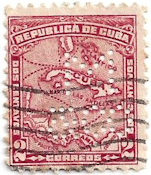 |
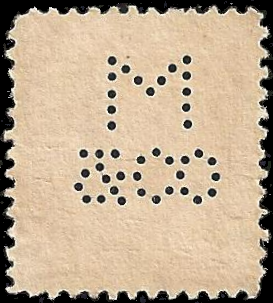 * * |
No cover has been documentedNingun uso en cubierta se ha reportado. |
| 14 | Unknown firm 1914 Probably a U.S. firm. It is listed in the U.S. Perfins Catalog as M054 belonging to an unidentified user with known usages from 1912-1917. It is also listed in the U.S. Revenue Catalog as MA0160 with uses on documentary stamps. |
 |
195 | 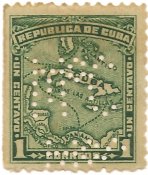 |
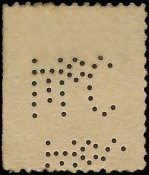 * * |
No cover has been documentedNingun uso en cubierta se ha reportado. |
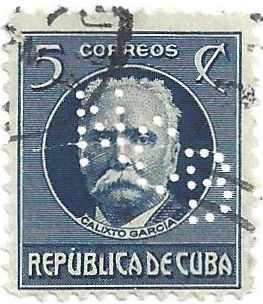
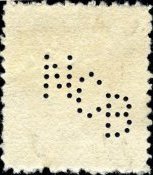
| 15 | National City Bank of New York 1 O'Reilly & Compostela, La Habana 1914 - 1946 |
 |
203, 205, 206, 206a, 207, 208, 209, 210, 211, 212, 213, 214, 215, 216, 217, 218, 219, 220, 222, 223, 224, 225, 226, 227, 229, 230, 231, 233, 234,
235, 236, 237, 238, 239, 240, 241, 242, 243, 244, 245, 247, 251, 252, 253, 254, 256, 258, 259, 260, 261, 262, 263, 265, 267, 268, 269, 270, 271, 272A, 273, 273A, 274, 275,
278, 281, 283, 293, 295, 297, 298, 302, 303, 304, 328, 330, 331, 332, 335, 335s, 336, 340, 346, 353, 369, 380, 384 Postal Tax 1, 2 Semi-Postal 1 Timbre Nacional revenue |
 |
 * * |
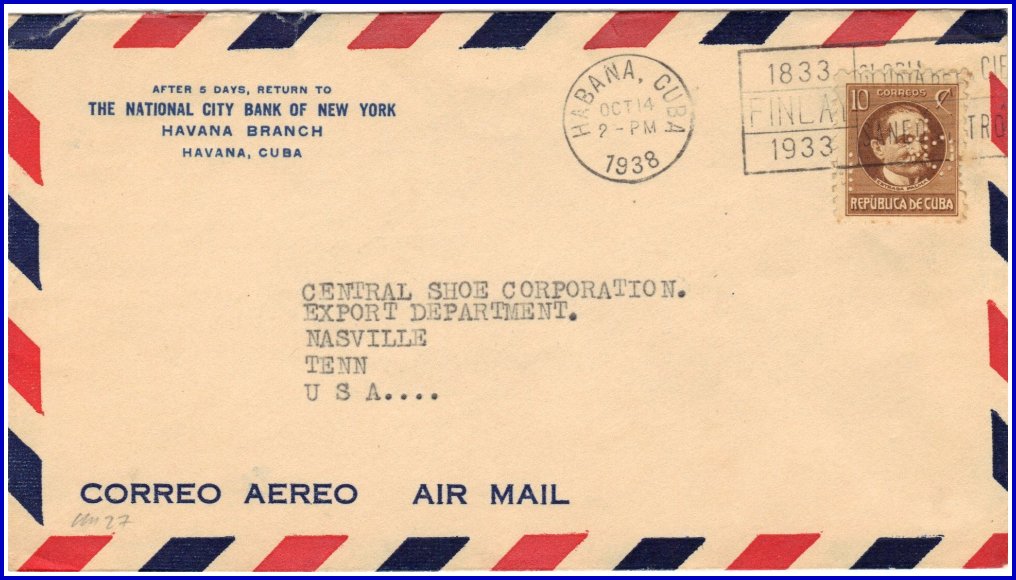 14 October 1938 |
| 16 | New York Life Insurance Company Edward Clarkson, agent, Lonja 524, La Habana 1914 - 1922 |
 |
195, 196, 196A, 198, 205, 206, 206a, 207, 208, 210 | 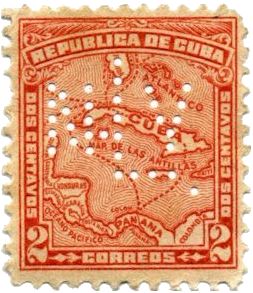 |
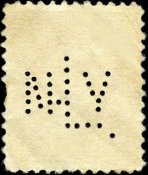 * * |
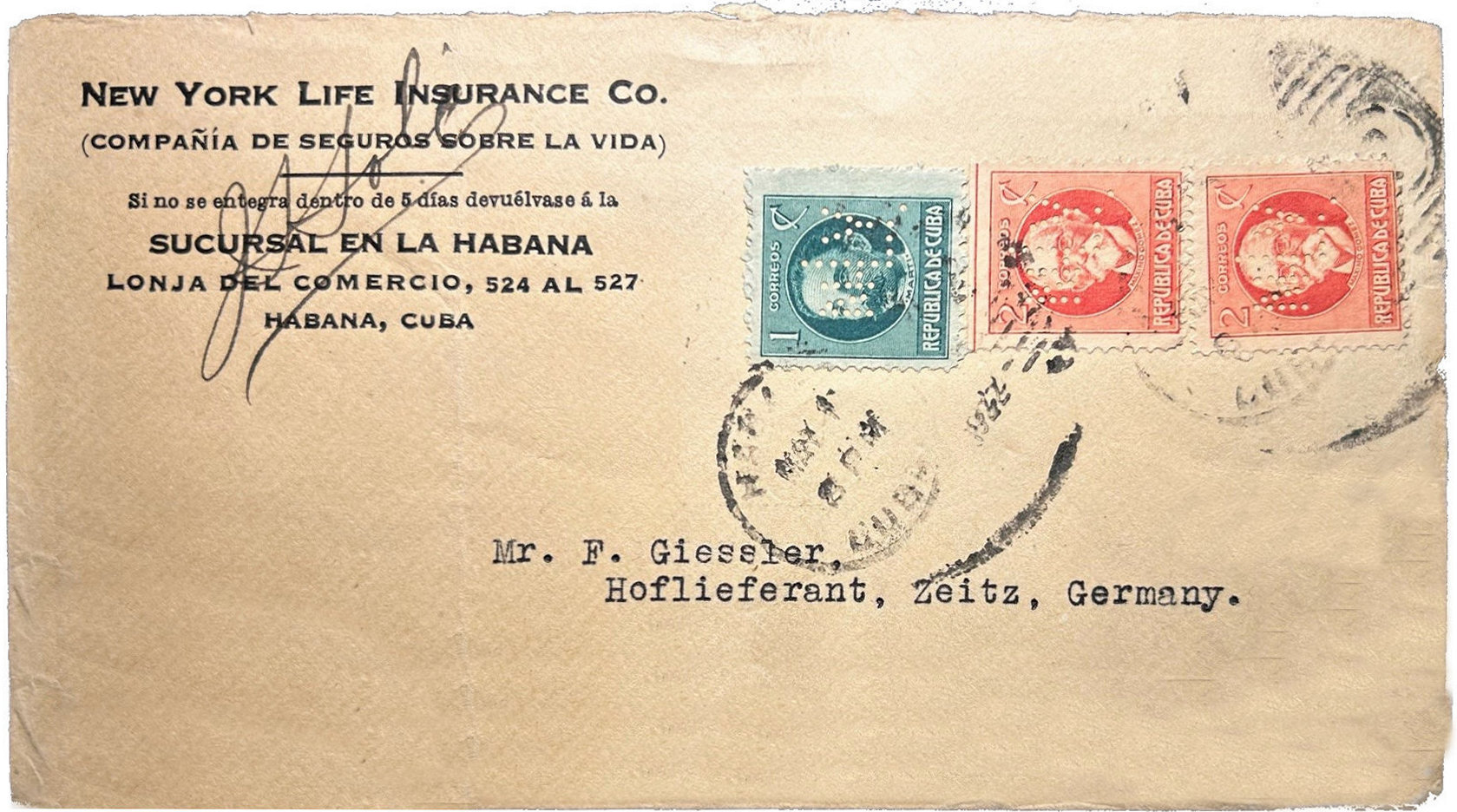 1 May 1922 This single example of the NLY perfin on cover is owned by collector Maciej Pilecki. |
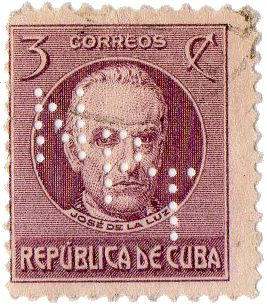
| 17 | National Paper & Type Co. of Cuba, S.A.1 O'Reilly 46, La Habana 1914 - 1938 This is the Havana branch of the much larger U.S. enterprise which imported and distributed paper products and office goods. |
 |
203, 205, 206, 206a, 207, 208, 210, 215, 216, 218, 225, 244, 245, 247, 251, 252, 253, 254, 256, 264, 267, 271, 297, 328 Semipostal 1 Postal Tax 1 Semi-Postal 1 Timbre Nacional revenue |
 |
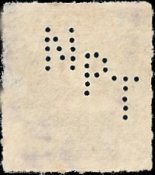 * * |
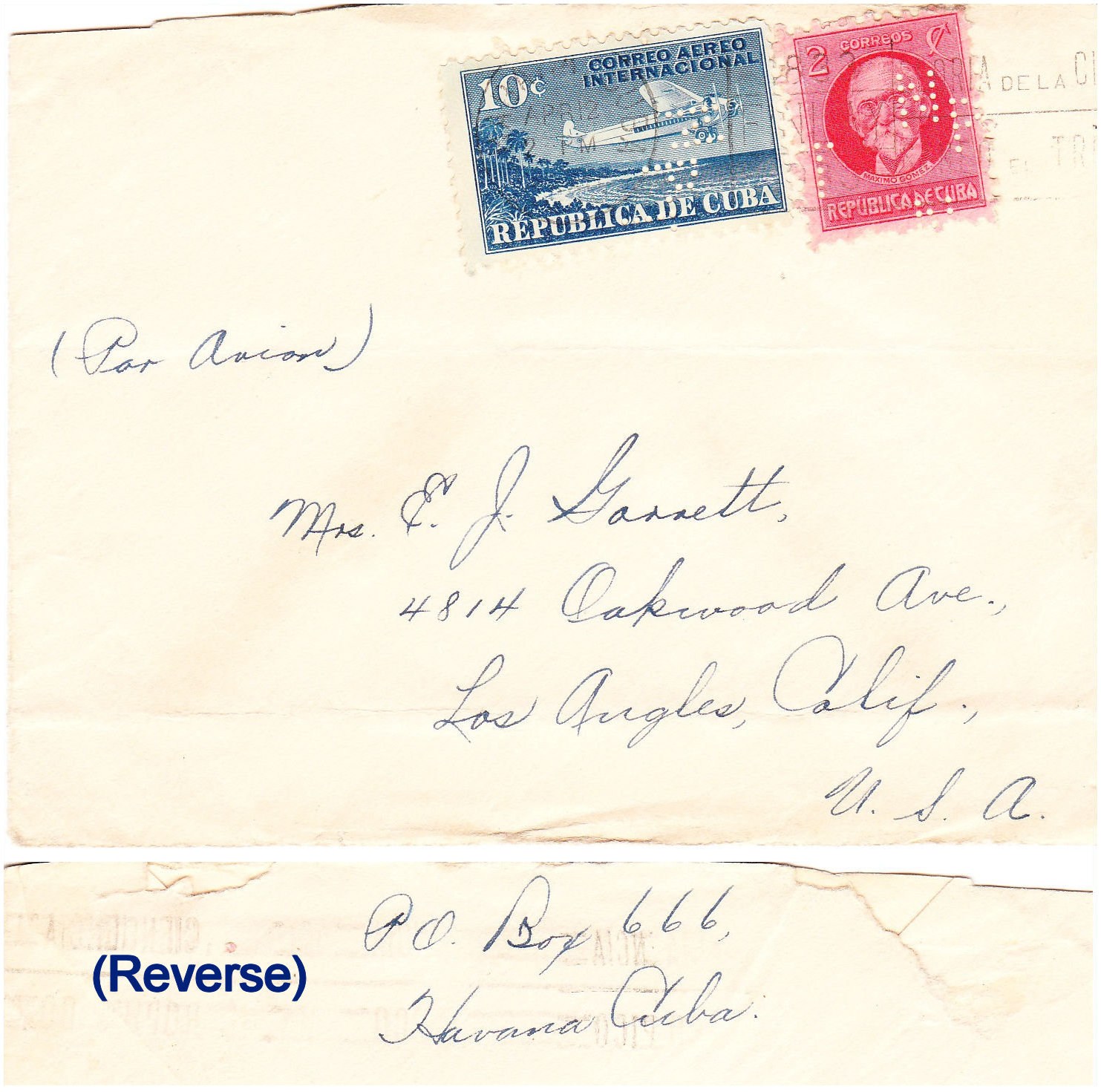
13 September 1927 No cover has been documented on company envelope corner card, but P.O. Box No 666, which is hand written on the reverse, is correct for the company. |
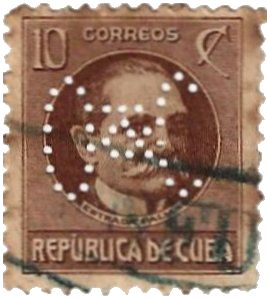
| 18 | Odriozola y Cía 1 D'Clouet 12, Cienfuegos 1917 - 1925 This firm imported and distributed hardware. |
 |
205, 206, 206a, 207, 208, 210, 214, 215 Timbre Nacional revenue |
 |
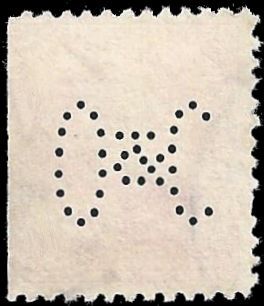 |
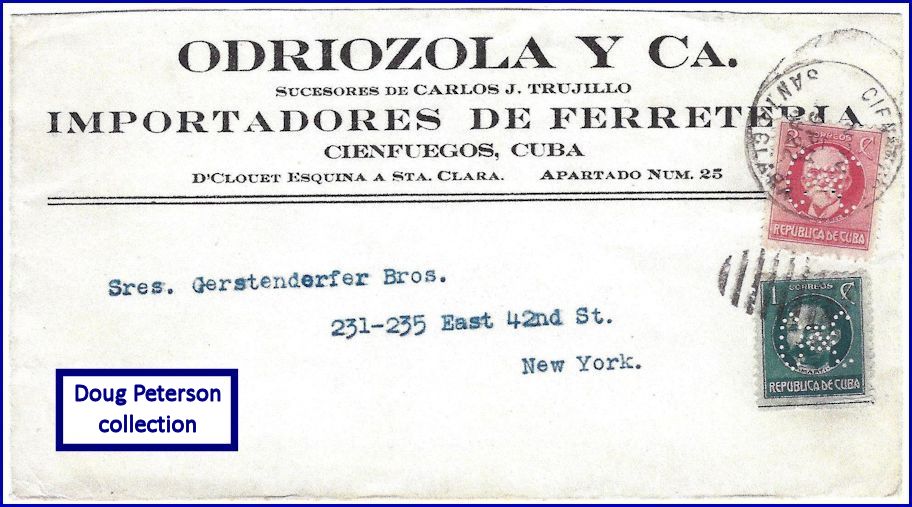 2 November 1922 This single example of the O&C perfin on cover is owned by collector Doug Peterson. |
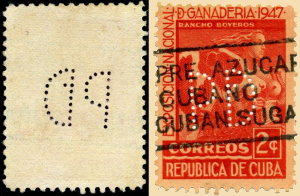
| 19 | Parke, Davis & Cía Gervasio 137, La Habana 1930 - 1951 |
PD | 219, 247, 248, 251, 252, 253, 255, 256, 256a, 258, 263, 264, 265, 330, 331, 332, 336, 338, 340, 342, 345, 350, 353, 355, 356, 360, 365, 369, 376, 380, 382, 386, 389, 393, 396, 399, 401, 403, 407, 408, 418, 426, 433
Postal Tax 2, 3, 4, 5, 6, 7, 8, 10, 14 |
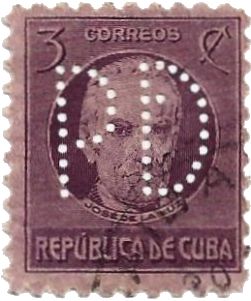 |
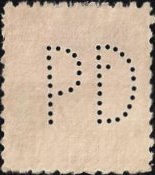 * * |
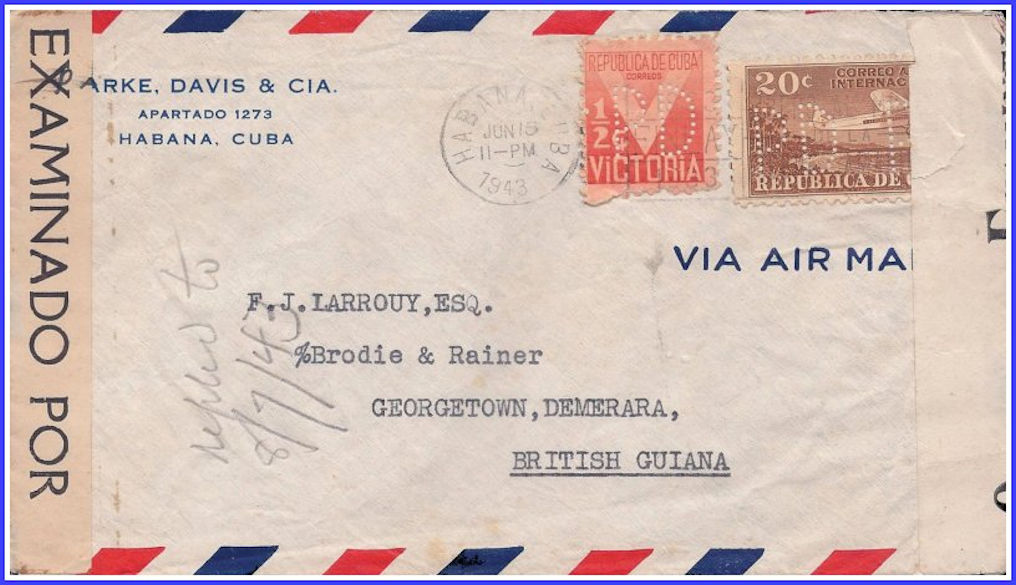 15 June 1943 |
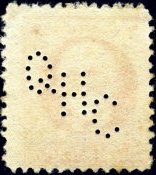
| 20 | Quiñones Hardware Corporation 1 Monte 214-222, La Habana 1917 - 1919 This company began in 1916 using an English language name. It's corner card read "Ferreteria y Maquinaria" which means hardware and machinery. There is an internet reference that indicates the firm sold its assets in 1922. |
 |
205, 206, 206a, 207 Timbre Nacional revenue |
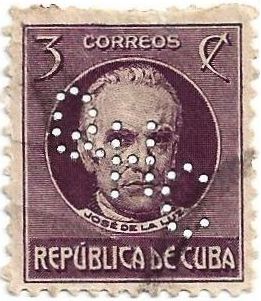 |
 * * |
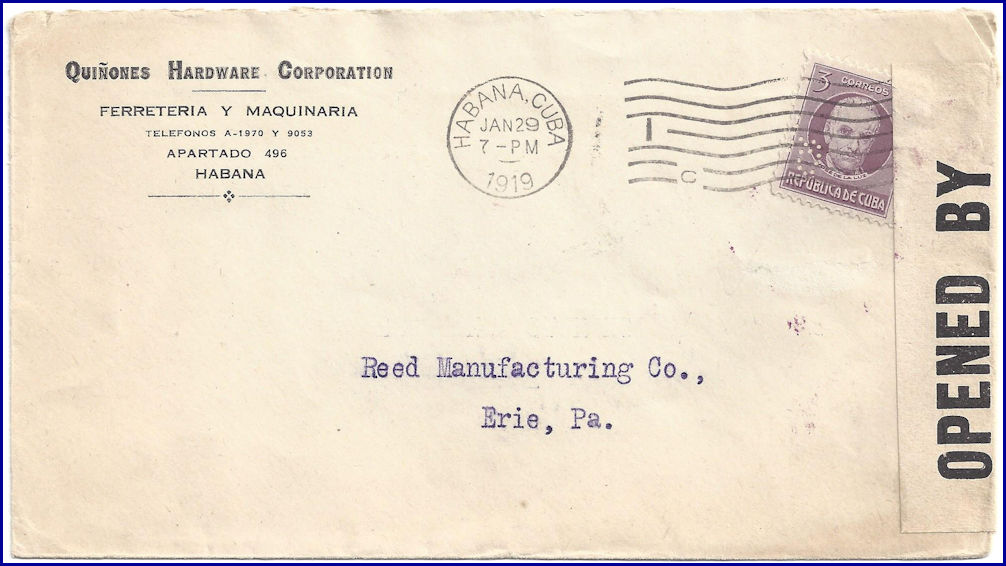 29 January 1919 This single example of the QHC perfin on cover is owned by collector Robert Littrell. |
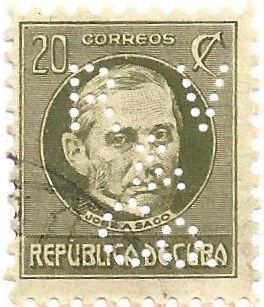
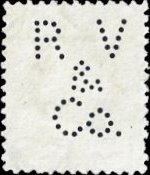
| 21 | Ricardo Veloso y Cía, Cultural S.A. Galiano 62 (corner of Neptuno), La Habana 1917 - 1949 Libreria Cervantes was Ricardo Veloso Guerra's Havana bookstore, founded in 1910. Eventually boasting the largest inventory of books in Havana, Libreria Cervantes also distinguished itself as the first bookstore in the city to sell books on credit. Veloso also edited and published books for Cervantes. In 1926, Veloso merged his company with Cultural S.A. and they expanded their business in Cuba as well as abroad. In the process, they assumed a prominent role in Havana's literary and cultural circles. |
RV & Co. |
205, 206a, 207, 208, 209, 210, 211, 212, 214, 215, 216, 217, 219, 224, 225, 226, 229, 234, 235, 240, 241, 242, 245, 246, 247,
248, 251, 252, 253, 255, 256, 256a, 257, 258, 259, 260, 261, 263a, 263b, 264, 265, 266, 267, 269, 270, 277, 279, 280, 282, 284, 293, 296, 304,
328, 329, 330, 331, 332, 334, 335, 336, 337, 338, 339, 340, 342, 345, 348, 349, 350, 351, 353, 354, 357, 360, 361, 363, 364, 365,
369, 370, 373, 374, 380, 381, 382, 384, 386, 390, 391, 392, 399, 401, 402, 403, 405, 408, 411, 419, 421 Semi-Postal 1, Postal Tax 1, 2, 3, 4, 5, 6, 7, 8, 9 |
 |
 * * |
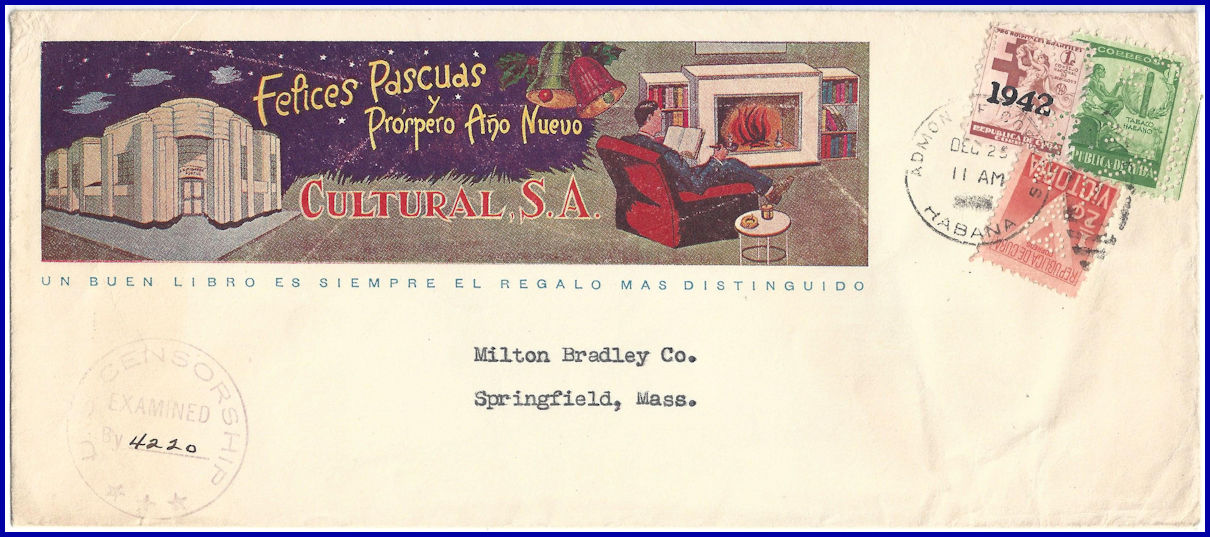 24 March 1942 |
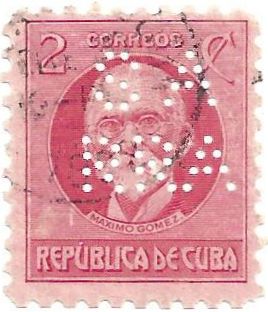
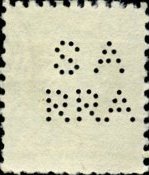
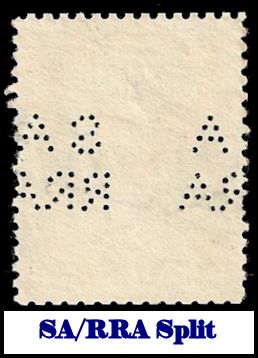
| 22 | Droguería Sarrá 1 Teniente Rey & Compostela, La Habana 1914 - 1954 Droguería Sarrá was established in 1853 in Havana by Dr. José Sarrá to provide pharmaceutical and homeopathic products. Under his son, Dr. Ernesto José Sarrá, Droguería Sarrá was expanded and improved to become the largest pharmaceutical and distribution company in Cuba and in Latin America until 1960 when the government confiscated all private businesses. |
SA RRA |
203, 205, 206, 206a, 207, 208, 210, 214, 215, 216, 216As, 217, 218, 219, 220, 222, 224, 225, 227, 241, 244, 245, 247, 251, 252, 253, 254, 255, 255a,
256, 258, 261, 263, 264, 264a, 265, 267, 268, 269, 271, 272, 272A, 273A, 274, 275, 276, 277, 278, 279, 281, 281a, 286, 287, 288, 288s, 292, 293, 294, 295, 297, 300, 301,
302, 303, 304, 328, 331, 332, 336, 337, 339, 357, 381, 414, 578, 581, 583, 586, 590 Semi-postal 1, 2 Postal Tax 1, 2, 3, 4, 5, 6, 7, 8, 9, 10, 11, 12, 13, 14, 15, 16, 17, 18, 19, 20, 21, 22, 23, 24, 25, 34, 39 Timbre Nacional revenue |
 |
 * * |
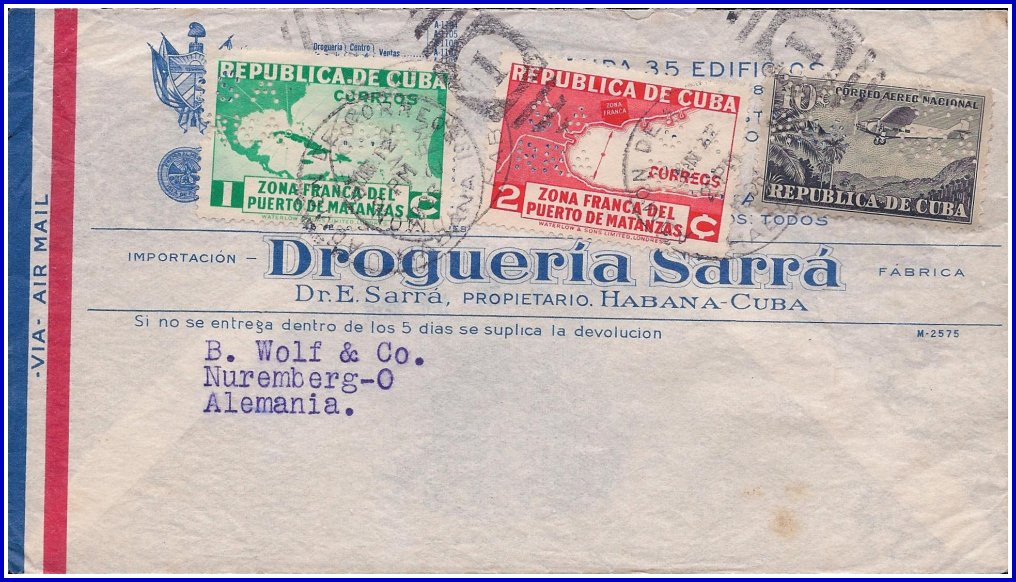 22 June 1936 |
| 23 | Solís Entrialgo y Compañía Galiano 77 (Corner of San Rafael), La Habana 1917 - 1929 In 1888 two brothers who emigrated to Cuba, José (Don Pepe) and Bernardo Solis, established a dry goods store at the corner of Galiano and San Rafael. They joined forces with Entrialgo Aquilino, forming the commercial firm of Solis Entrialgo and Cia. in 1900. It later operated a large luxury department store under the trade name El Encanto (the charm). |
 |
205, 206, 206a, 207, 208, 209, 210, 211, 212, 214, 215, 216, 217, 219, 221, 222, 223, 224, 227, 229, 231, 270 Timbre Nacional revenue |
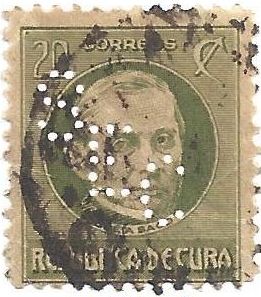 |
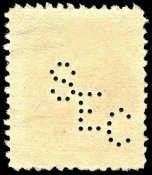 * * |
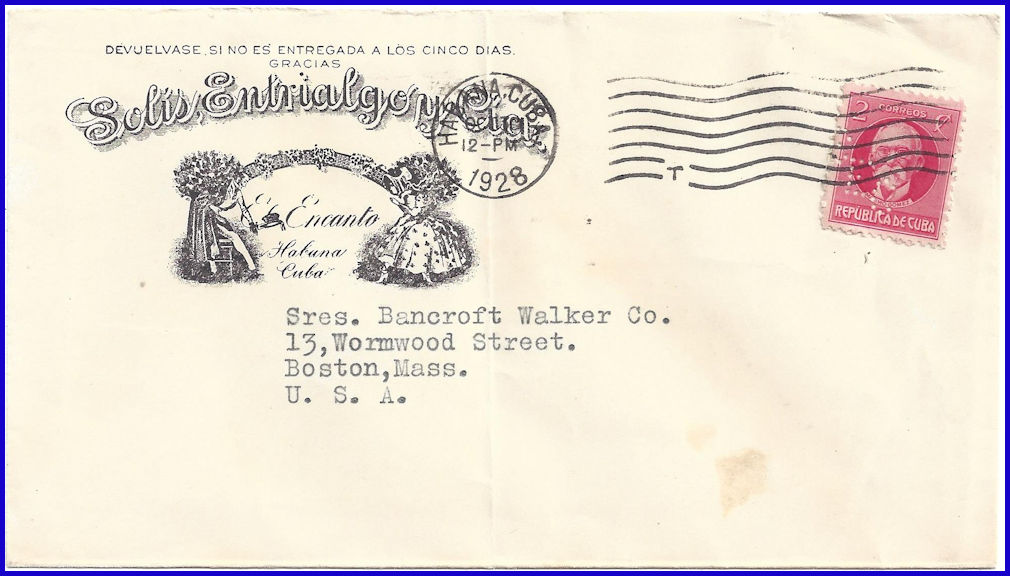 30 October 1928 |
|
Footnotes: |
||||||
2 – Official Punch Perfins |
||||||
| No. | Cuba / Years of Use | Perfin | Stamps Perforated | Front | Reverse (* Mirror image) |
Usage (Click to enlarge) |
|---|---|---|---|---|---|---|
| 1 | República de Cuba Official punch, 1904 Revaluation of postal card from 2 centavos to 1 centavo Click on this link for more República de Cuba official punch covers. |
1 | Edifil Tarjeta postal 69 | 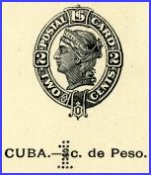 |
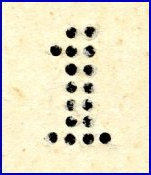 * * |
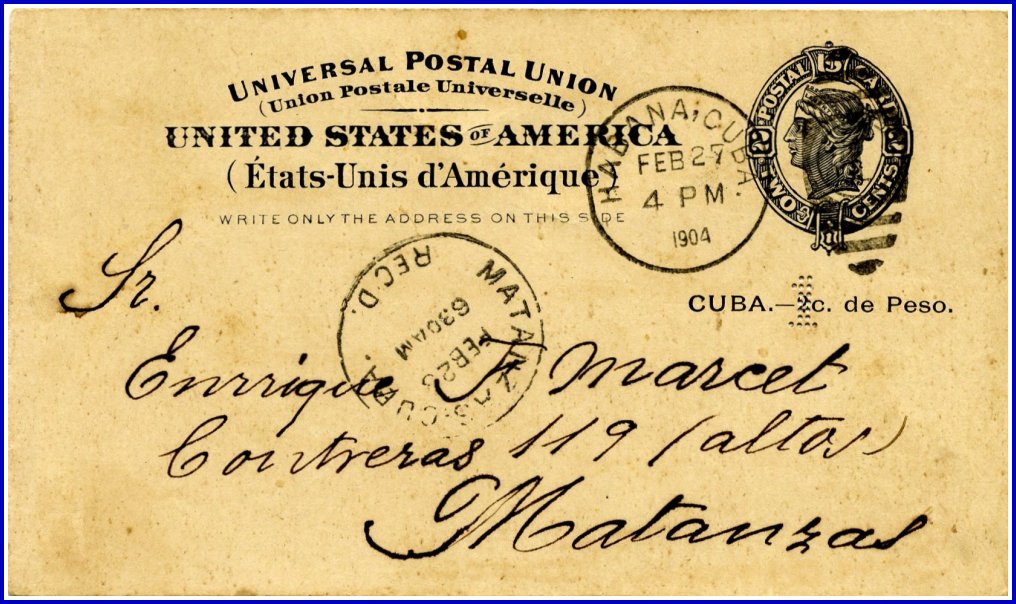 27 February 1904 |
| 2 | República de Cuba Post Office Department Official punch, 1917 - 1931 known usage Tarjeta de Identificación (Identification Card) |
 |
Edifil 186, 200A, 210, 218 | 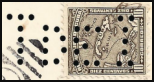 |
 * * |
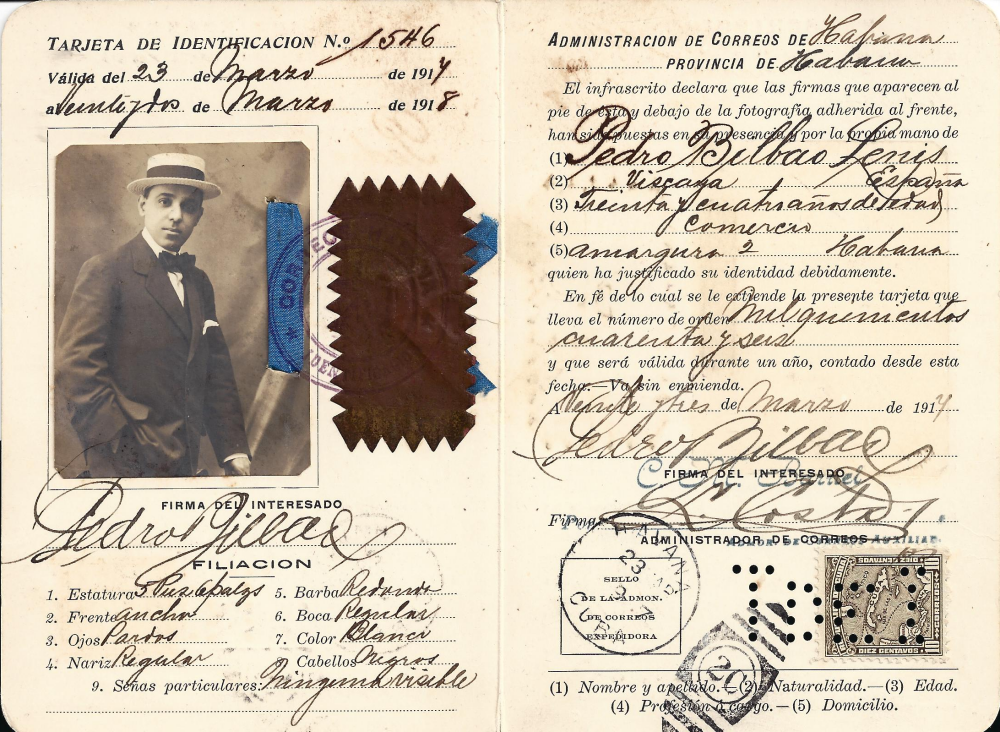 |
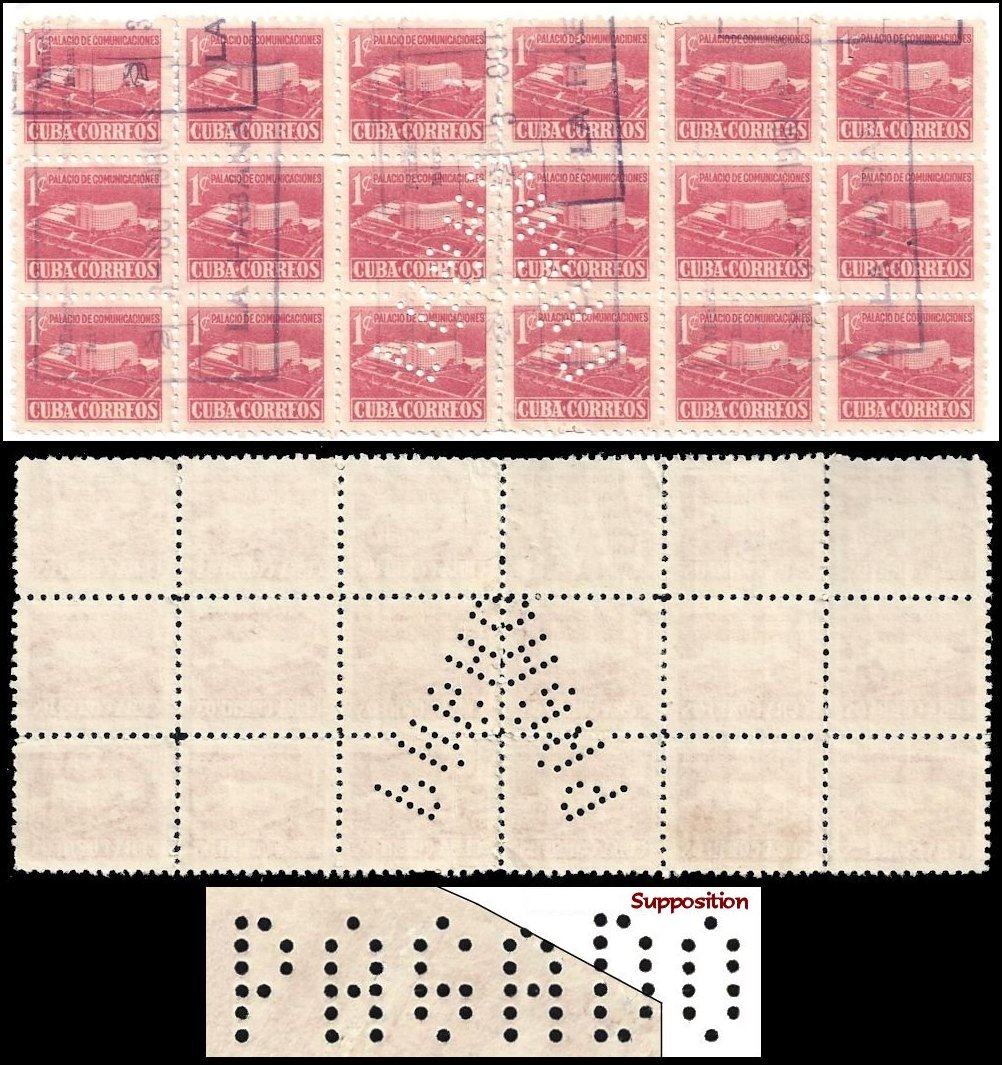
| 3 | República de Cuba Official punch, 1960 |
PAGADO (PAID) |
Edifil Postal Tax 39 Scott C204 (1960) |
 |
|
|
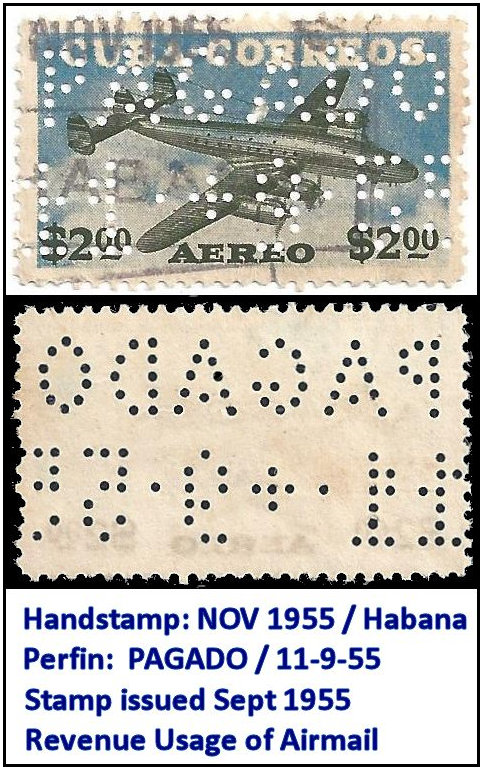
| 4 | República de Cuba Official punch, 1955 |
PAGADO (+ date) |
Edifil 629 Scott C120 (1955) |
 |
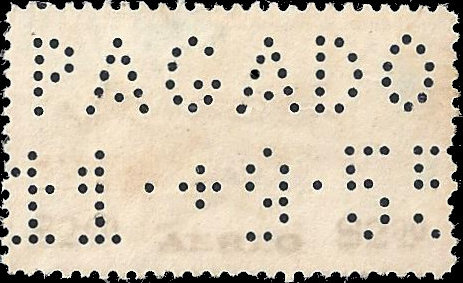 * * |
Revenue use of airmail postage stamp |
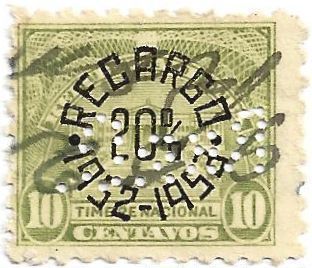
| 5 | República de Cuba Official punch, 1952 |
REP.C. | Jones Revenue Stamps of Cuba GP120 |
 |
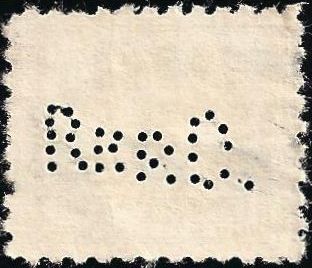 |
|
| 6 | República de Cuba Official punch, 1923 |
PAGADO (Larger version than No. 3) |
Jones GP19 (1924) | -Front.jpg) |
.jpg) |
-Front+Back.jpg) |
3 – Perfins known only on Cuban Revenue Stamps |
||||||
| No. | Company & Address | Perfin | Types of Documents Perforated | Scan of examples | ||
|---|---|---|---|---|---|---|
| 1 | Unknown company | AECo | Timbre Nacional revenue stamps Recargo 1957-1958 |
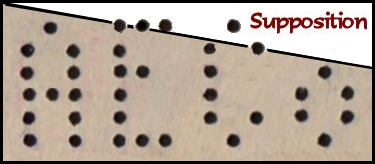 |
||
| 2 | J.F. Berndes & Co. [Tentative ID] Calle Cuba 64, La Habana This company was active in the sugar and machinery
business in the last part of the 19th century and the early 20th century. In 1918 it was blacklisted by the U.S. and then Cuba for trading with Germany during
World War I. This identification has not been confirmed.Esta identificacion no se ha verificado. |
J.F.B&Co | Sello revenue stamps & Pagos al Estado revenue stamps (literally, "Payments to the State" a gross business tax paid with this revenue stamp) and Sello (Stamp Tax or Timbre Movil), a revenue collected on insurance policies, stock certificates and the like. |
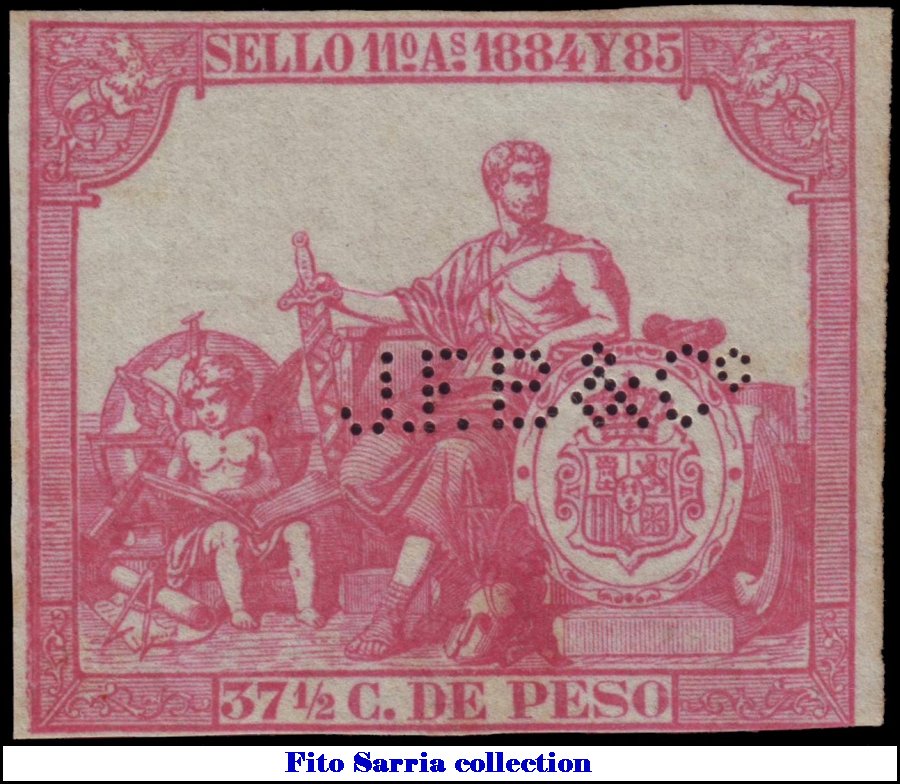 Click for large sized image. |
||
| 3 | Unknown company |
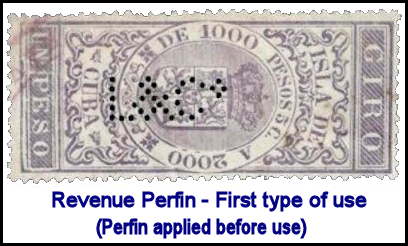
L&Co | Giro revenue stamps A revenue stamp was required on Giros (money orders, bills of exchange, drafts). In the example shown, one paid one peso as revenue to the government to place this stamp on a money order in the amount of 1000 to 2000 pesos. |
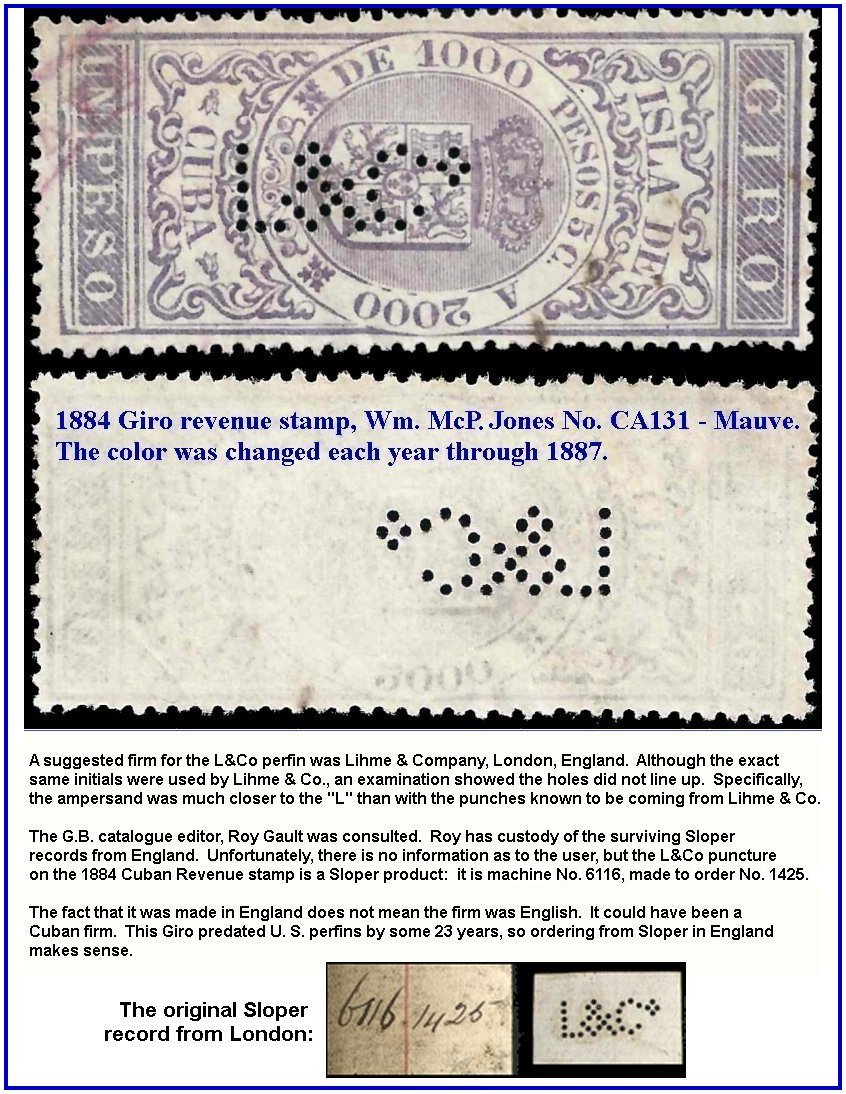 Click for large sized image. |
||
| 4 | N. Gelats y Cía [Tentative ID] Aguiar 108, La Habana This company was listed in an 1896 business directory as engaging in "banks and banking" and "commission merchants - importer and exporter". This identification has not been confirmed.Esta identificacion no se ha verificado. |
NG &Co |
Giro revenue stamps | 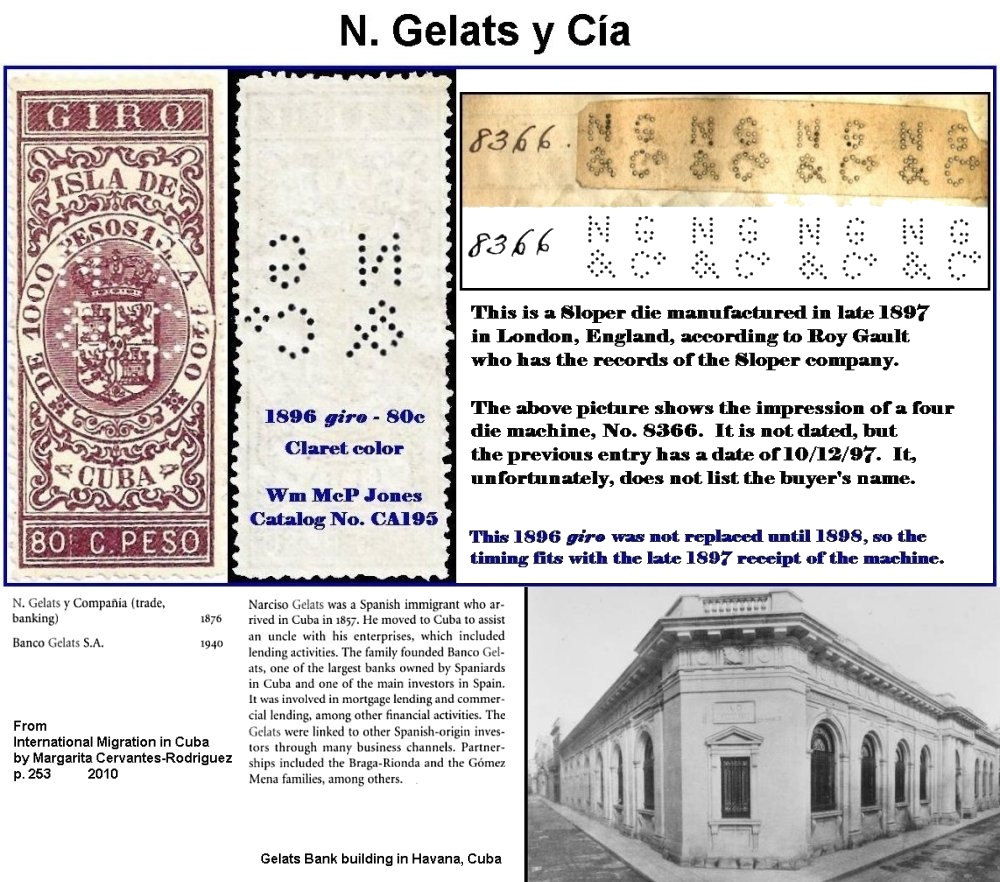 Click for large sized image. |
||
| 5 | Union Discount Co of London, Ltd 38 Lombard Street (1885-90) and 39 Cornhill (1890-), London, England This is a British company known to have perfined the revenue stamps of many countries. |
 |
Pagos al Estado revenue stamps (literally, "Payments to the State" a gross business tax paid with this revenue stamp) |
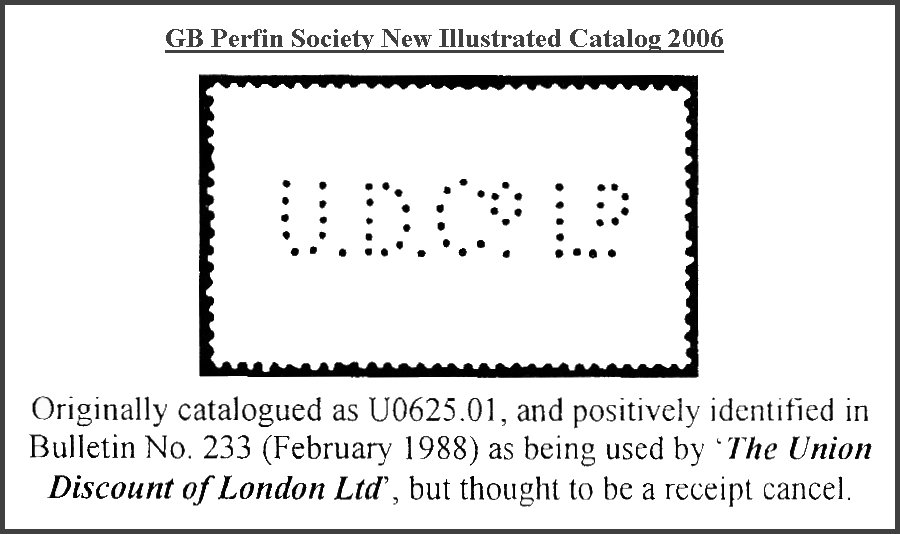 Click for large sized image. |
||
| 6 | Unknown company | W.Nco | Timbre Nacional revenue stamps Recargo 1951-1952 (Jones GP112) |
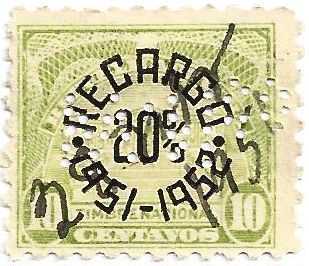 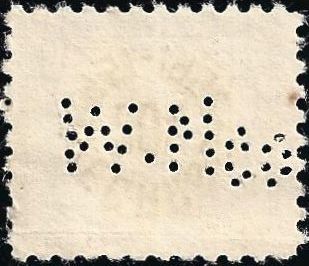 |
||
4 – Perfin Cancellations of Revenue Stamps and Unidentified Perfins |
||
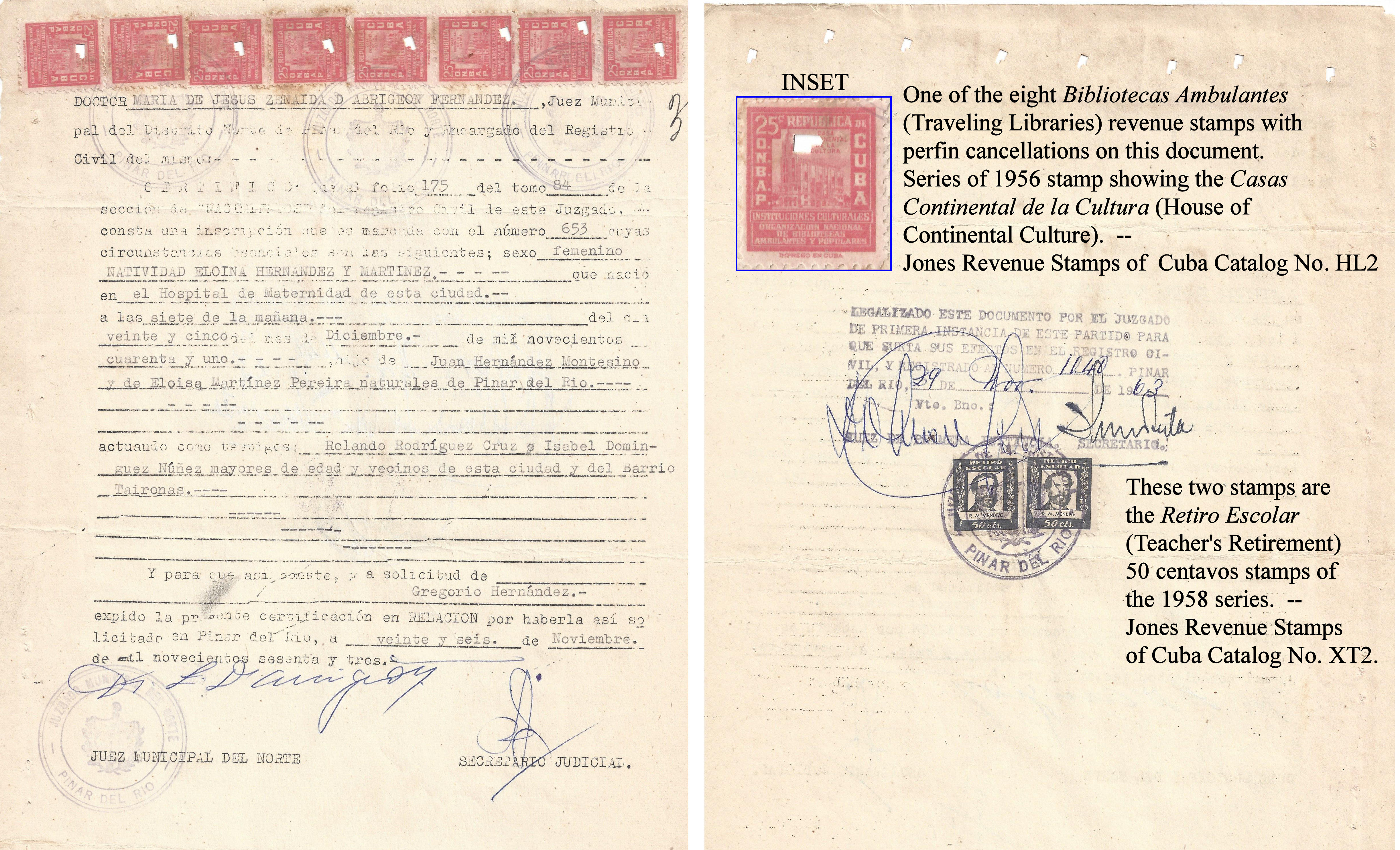
| Perfin Cancel Robert Littrell collection. Sometimes a revenue stamp is cancelled by perforating a hole in it rather than by ink stamp or pen. This birth certificate has eight revenue stamps which have been cancelled in that fashion. The revenue stamps date from 1956 and 1958 (on the back), but were used in 1963 after the revolution. Click on the image to enlarge it. |
 |
|
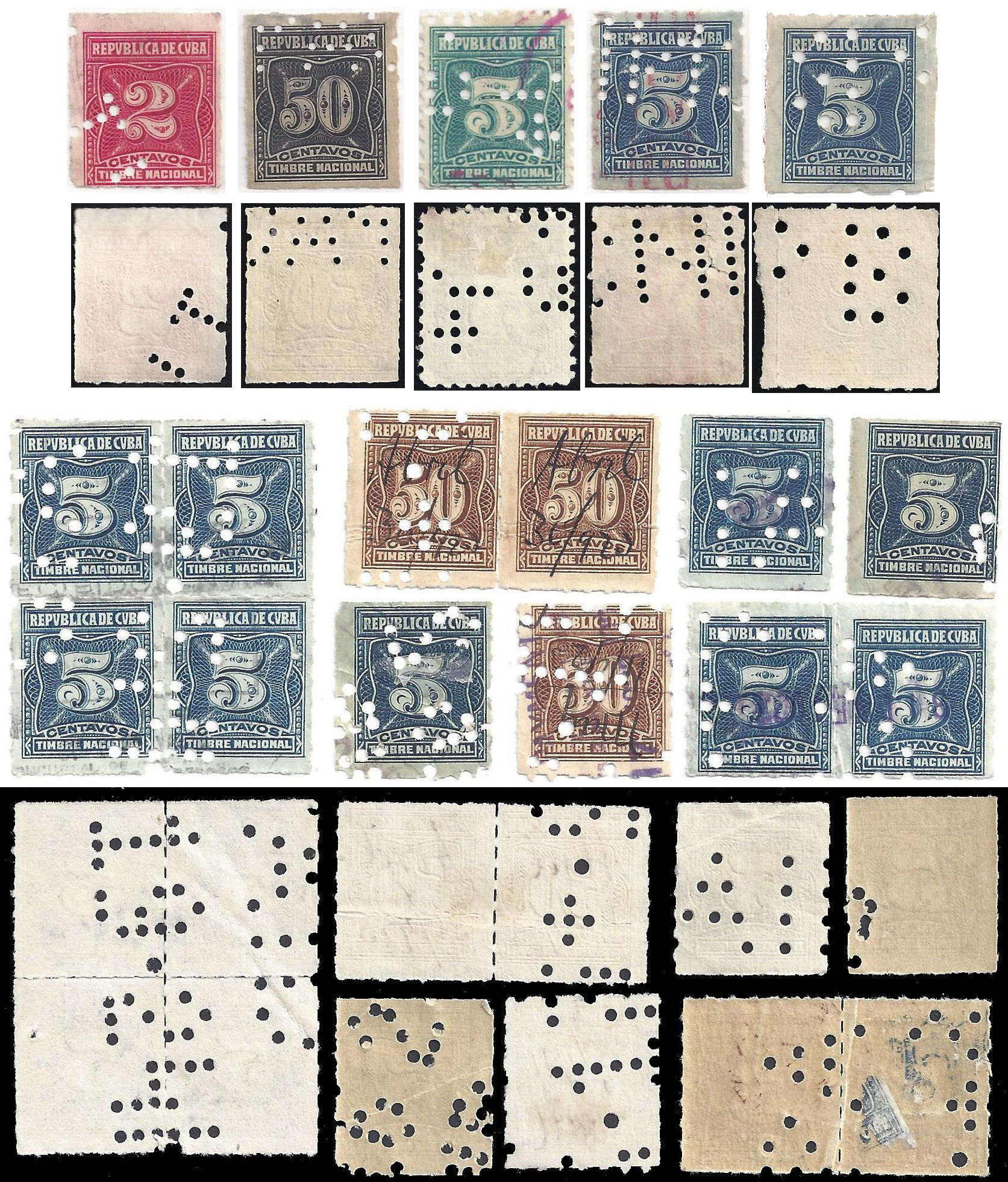
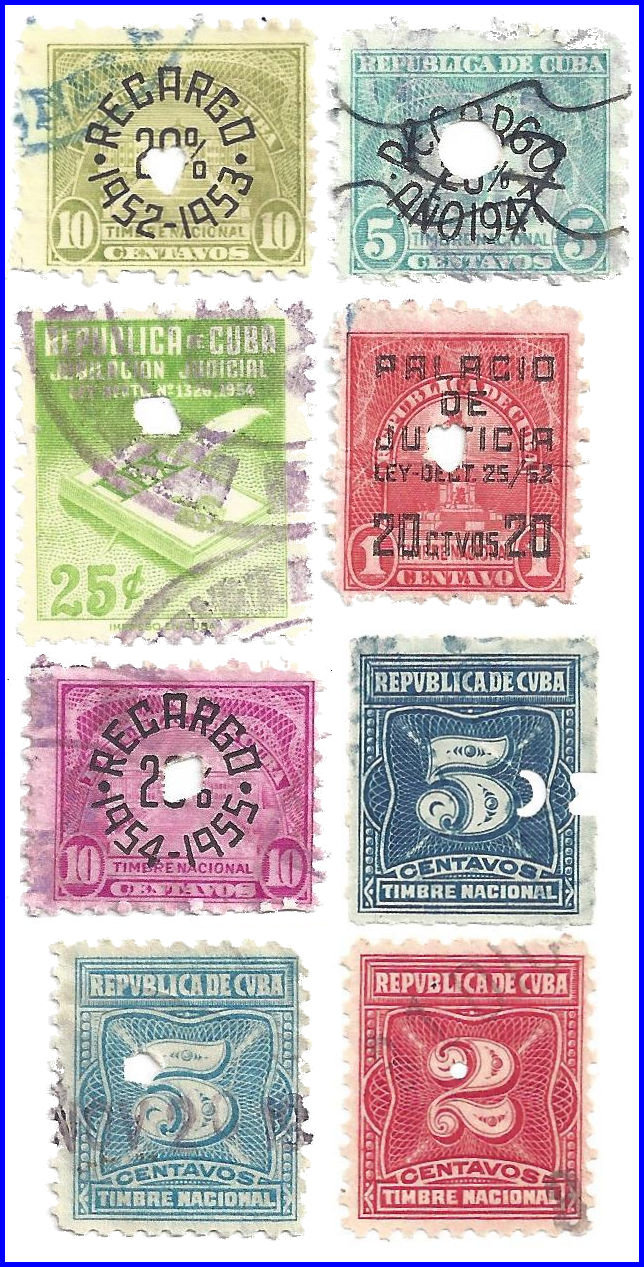
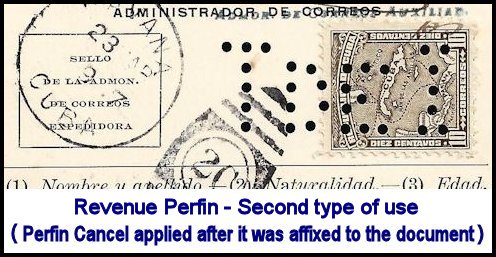
| Revenue Stamp Perfin Cancels Robert Littrell collection. These stamps were removed from their original documents, so it is difficult to discern their origins. These perfins were applied to cancel the revenue stamp after it was affixed to a document. Do you have any idea what any of these represent? Click on the image to enlarge it. |
 |
|
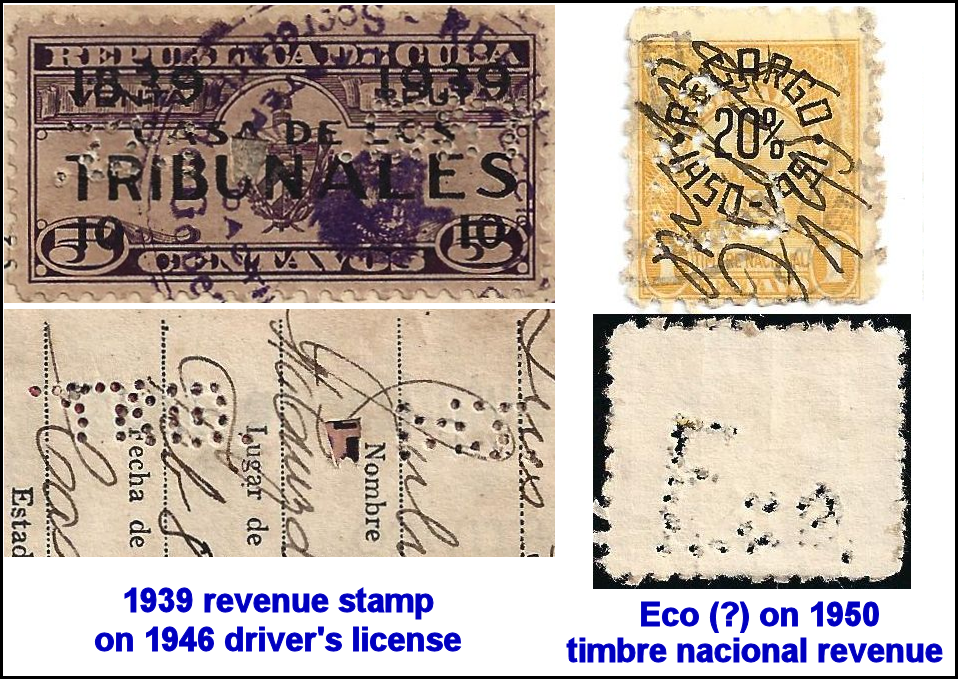
| More unknown perfins Robert Littrell collection. Here are some more mystery perfins on Cuban revenue stamps. Do you have any idea what they represent or what government agency cancelled the stamp? Click on any image to enlarge it. |
 |
|
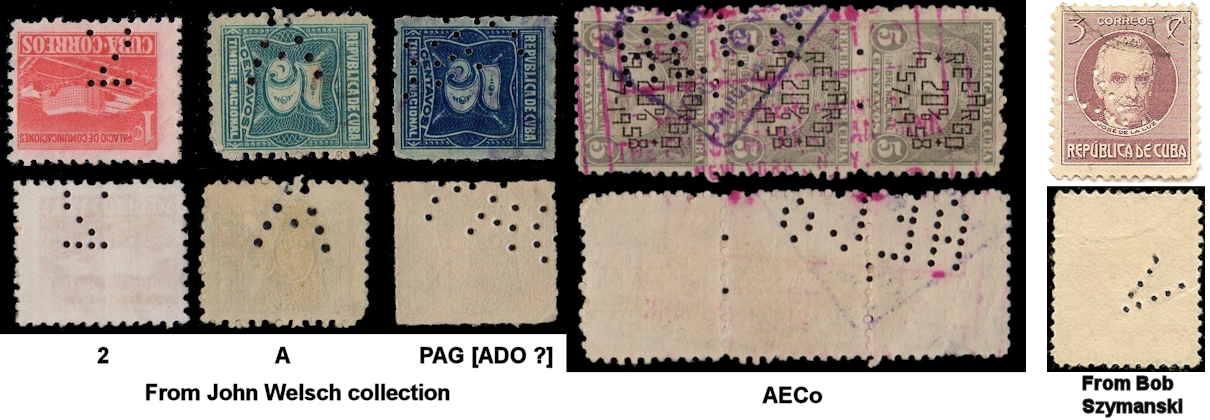
| Mystery Perfins Here are some mystery perfins on Cuban stamps. John Welsch's examples are all on revenue stamps. The first three appear to be perfin cancels. The fourth, AECo, is clearly a company. Bob Szymanski's example is anyone's guess. Do you have any idea what they represent? |
 |
|
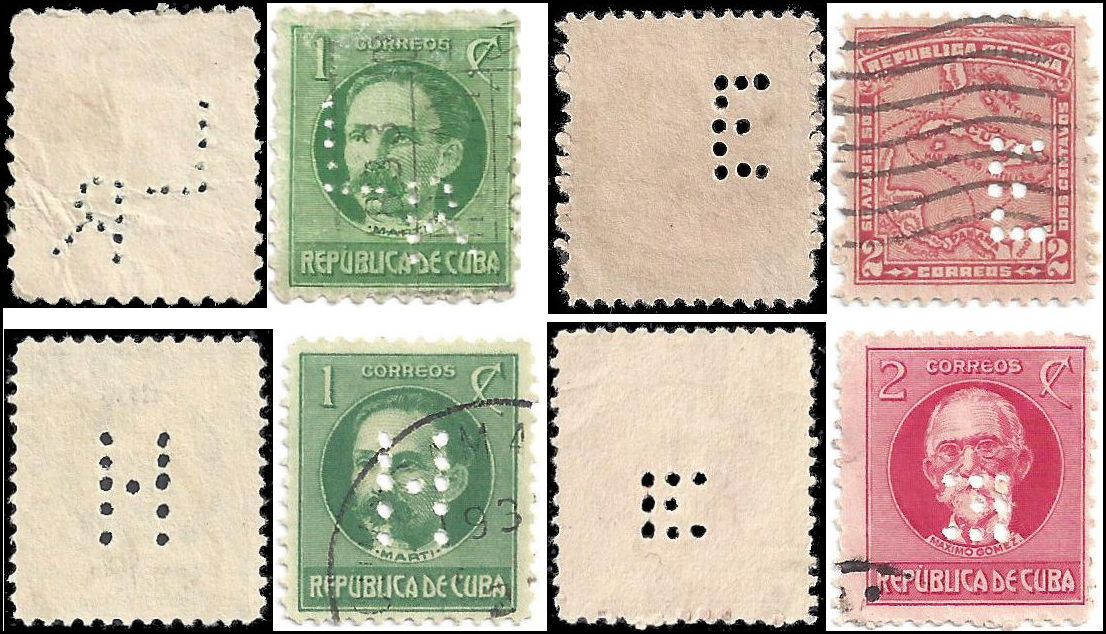
| Mystery perfins on postage stamps Robert Littrell collection. What these represent is unknown. Revenue cancellations? At first blush, the "LR" seems to be a company perfin. But look at the poor quality of the perforations. Look at the unaligned perfs of the "L" or even worse the right askew leg of the letter "R". Was someone just experimenting with perforations? Your guess is as good as mine. |
 |
|
Perfins originated in England where, unlike the U.S., one could take unused postage back to the post office and redeem it for cash. In 1868, when they were first allowed use on postage, a penny stamp was a fairly significant amount to a company junior clerk making perhaps 5 - 10 pence per week. A stamp with a perfin in it could not be redeemed. The use of perfins at least moderated theft from the company because, at least in theory, the post office would not accept perfin mail from anyone but the firm that had ownership. But, of course, there were always ways around the system and letters did get sent. At minimum, it prevented an employee from reselling discounted postage. The wide spread use of postage meters and permit indicia ended the practice of using perfins.
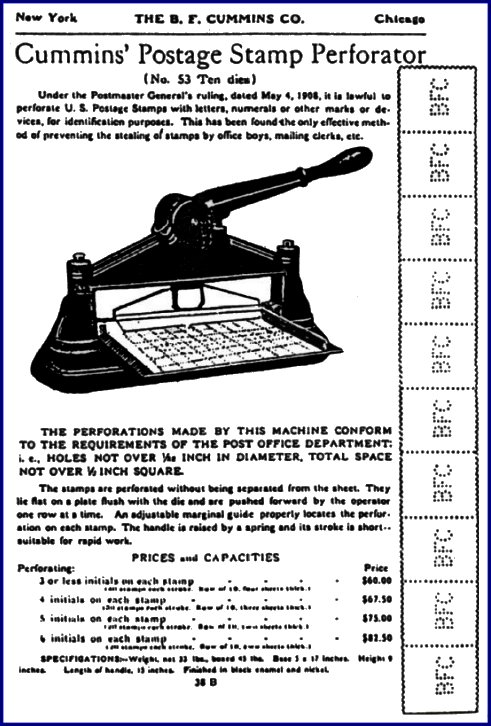
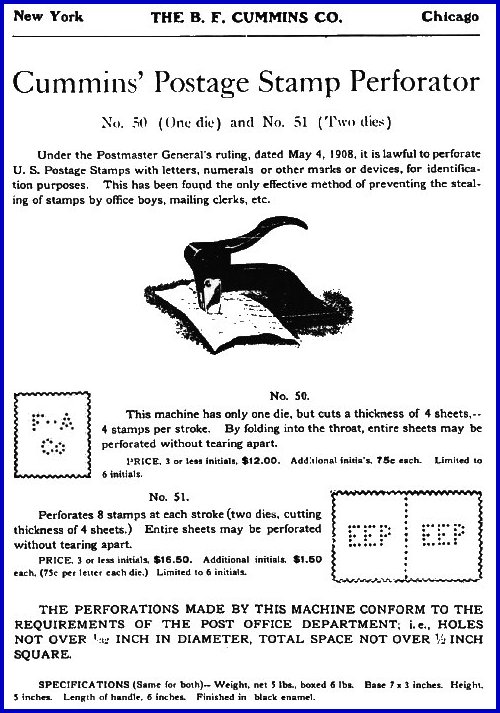
So how were the stamps perforated? Two examples from circa 1908 are in the illustrations on the right. One example shows a machine with 10 dies. You could perforate an entire sheet of stamps without separating them. To determine how many stamps would be perforated with one stroke of the lever, the strip of 10 would be multiplied by the number of sheets. For example, the legend tells us that if three initials are set to be punched (the most common), then four sheets of stamps can be inserted. With each stroke of the lever you would then punch 40 stamps. Sheets of 100 stamps then would require 10 strokes. This represented a fairly efficient way of perforating stamps.
Smaller firms that could not afford to shell out $60 or more for a 10 die machine could purchase a single die or two die machine (also illustrated). One could purchase a one die, 3 character, punch for $12 which was still a lot of money in 1908! In terms of saving money perforating, say, 2¢ stamps, you would have to prevent the theft of 600 stamps to justify the purchase of a $12 machine.
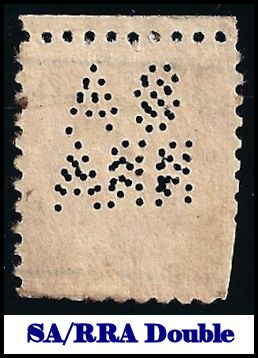
If one got in too much of a hurry and inserted too many sheets of stamps at one time, pins could break. This would be one explanation for seeing perfins where different holes are missing on different stamps; namely different dies are involved. Furthermore, over time with pin breakage one will find many different pin punches missing on stamps from a particular firm.
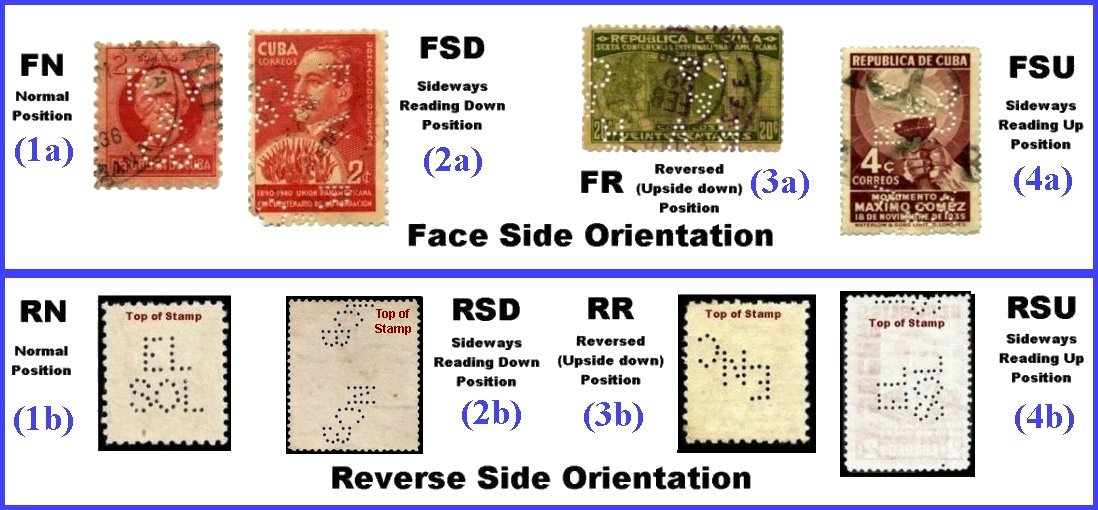
If you want to completely describe a perfin, you will want to describe how the punch is oriented. The first step is to look at the perfin and see if it reads correctly on the front side or back side. There are four orientation positions for each. The chart below illustrates the eight possible positions.
U.S. perfin collectors pay scant attention to orientation, perhaps because of the large number of U.S. perfins. On the other hand, in some smaller countries such as Finland, which only has 12 perfin patterns, they have a numbering system for orientation that follows a clockwise rotation (using Roman, rather than Arabic, numerals). Perhaps collectors there have more desire to expand their searches due to the limit on the number of perfins. There are eight times as many things to look for.
I have incorporated a numbering system (in blue) as well as a lettering system (in bold black) to provide a shorthand description.
The earliest known use of a perfin postage stamp (other than the official punch of the 1903 postal stationery card) will surprise you. Take a look by following this link.
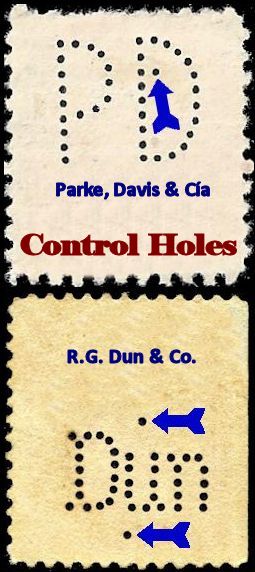
The Perfins Club included this glossary in their first Cumulative Index. Some of these terms have applicability in general philately, but some are distinct to the world of perfins. The glossary follows:
|
 |
||
 |
|||
 |
 |
 |
 |
|
 |
I would like to hear from you. Send comments to Robert Littrell. |